University of Oregon — B.Arch
Architecture • Design • Art
Find perfection in the imperfect.
About
As an architecture student at the University of Oregon, my design principle is simple: find perfection in the imperfect. I seek to find beauty in everything around me, bringing that perspective into every space I design. My work bridges hand-crafted techniques with advanced digital tools. I love balancing analog methods — graphite, charcoal, plaster casting, and physical fabrication — with precise digital workflows using AutoCAD, Rhino, Grasshopper, the Adobe Suite, and emerging AI platforms like Raven AI. Before UO, my background was shaped by rigorous training at Ichen Art Academy, an architecture workshop at Cal Poly SLO, and founding my graphic design business, Brushmi's Designs. Today, I channel my passion for community into roles with AIAS, the UO SACA Promo Committee, and as a co-creator of Bottu Mag. Above all, I design with compassion, joy, and an absolute dedication to the craft.
Design Studios
Studio 01 — ARCH 222 — Intro to Digital Design Methods
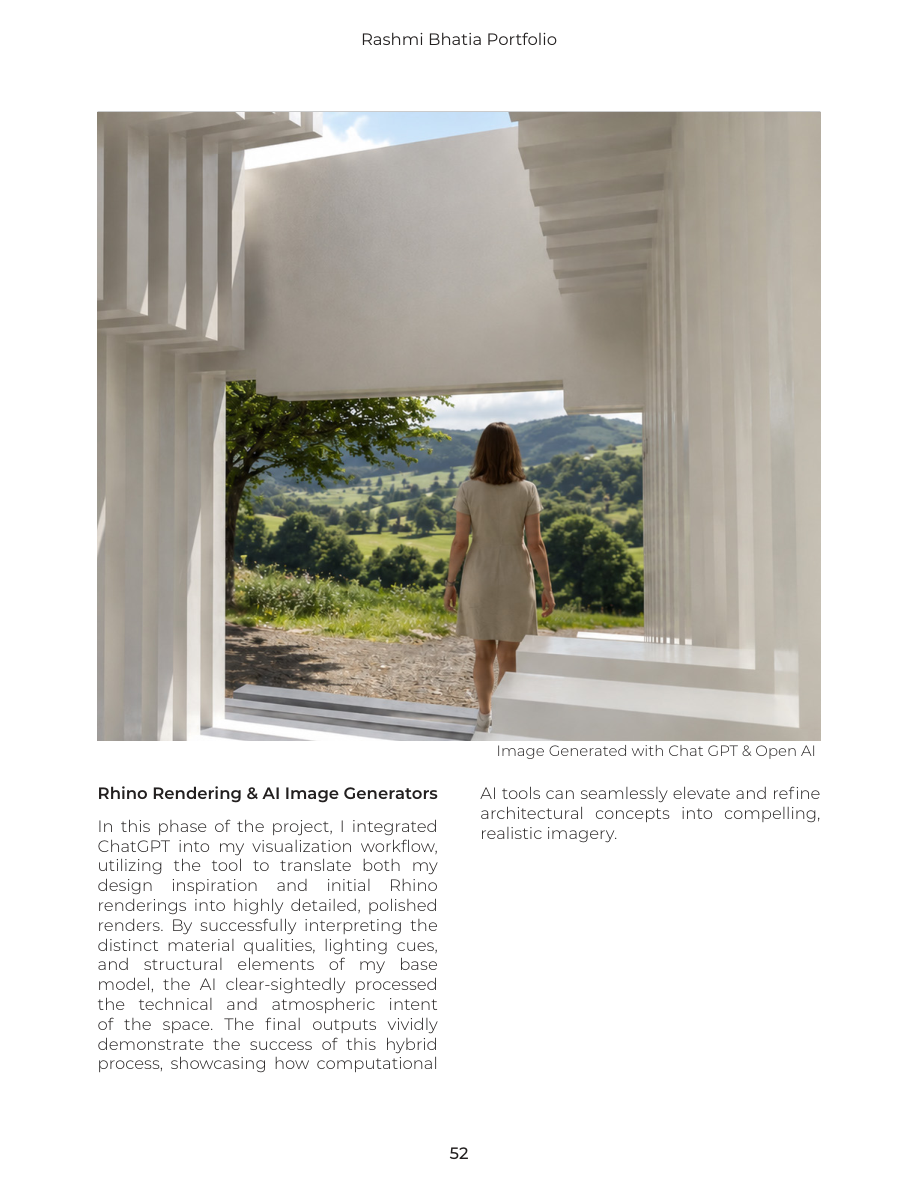
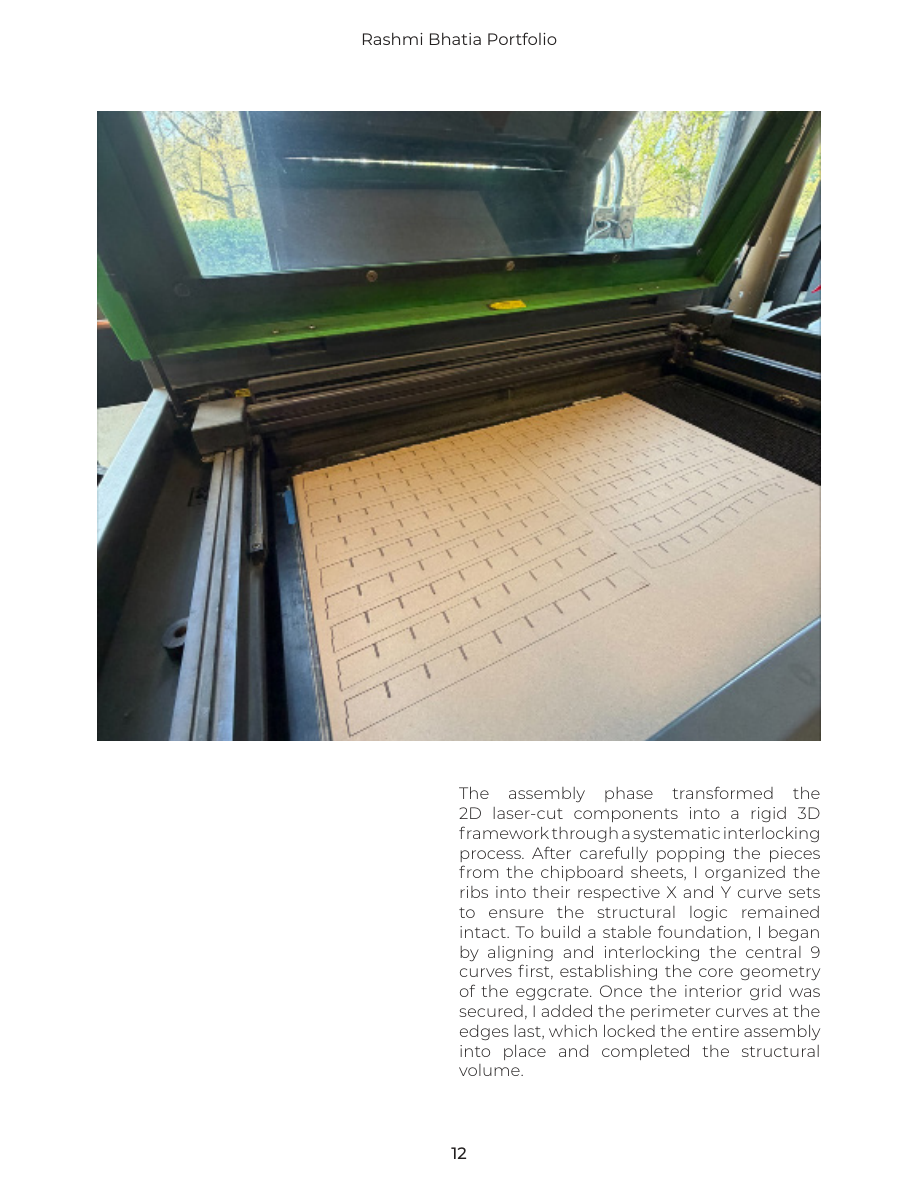
A workflow-focused studio bridging hand-crafted design and digital practice: Rhino modeling, Grasshopper parametric generation, laser-cut fabrication, photoreal Rhino rendering, and AI-assisted visualization with Raven AI / ChatGPT / Gemini (Nano Banana) / Adobe Firefly.
Studio 02 — ARCH 284 — Architectural Design Studio II
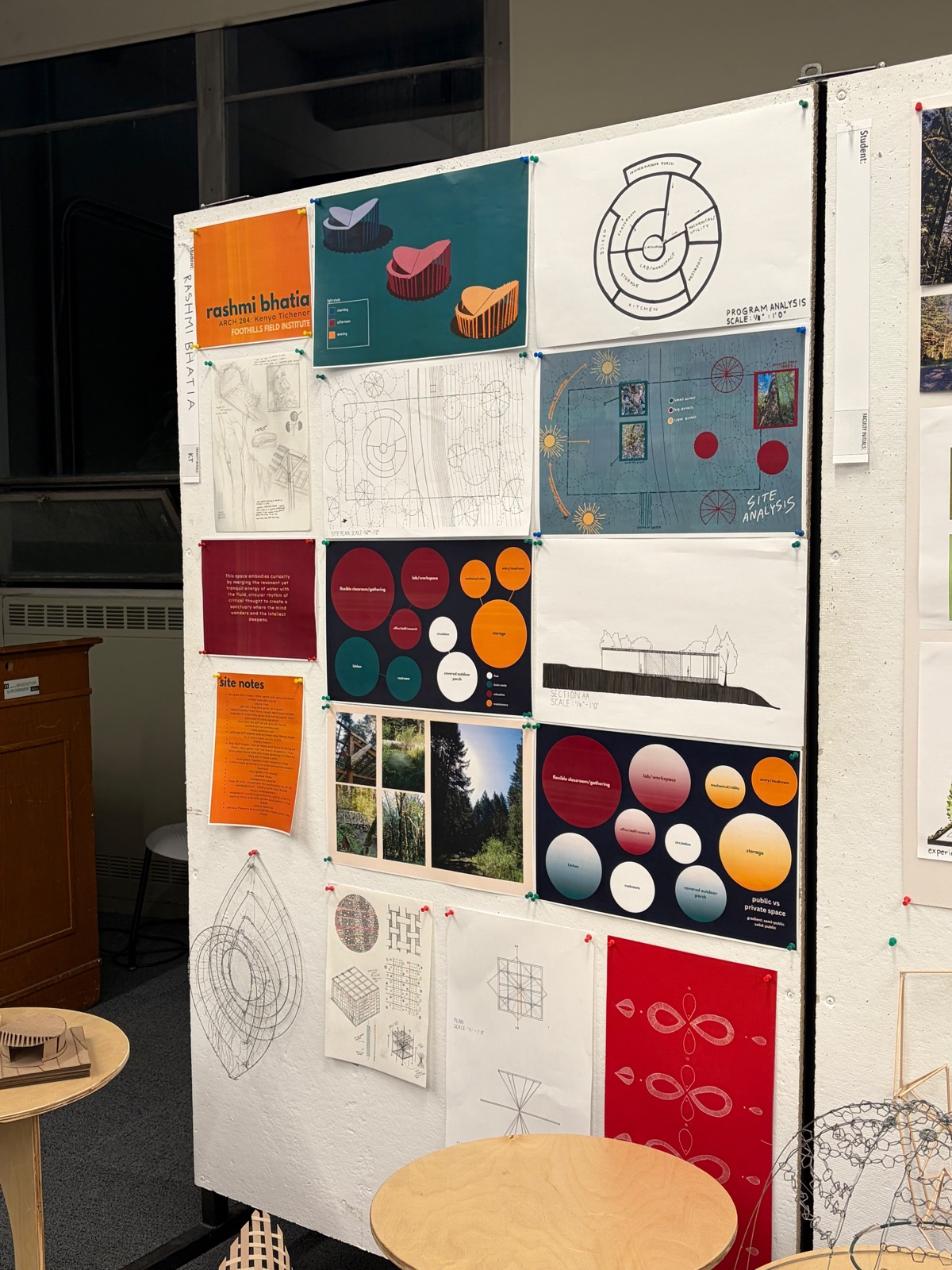
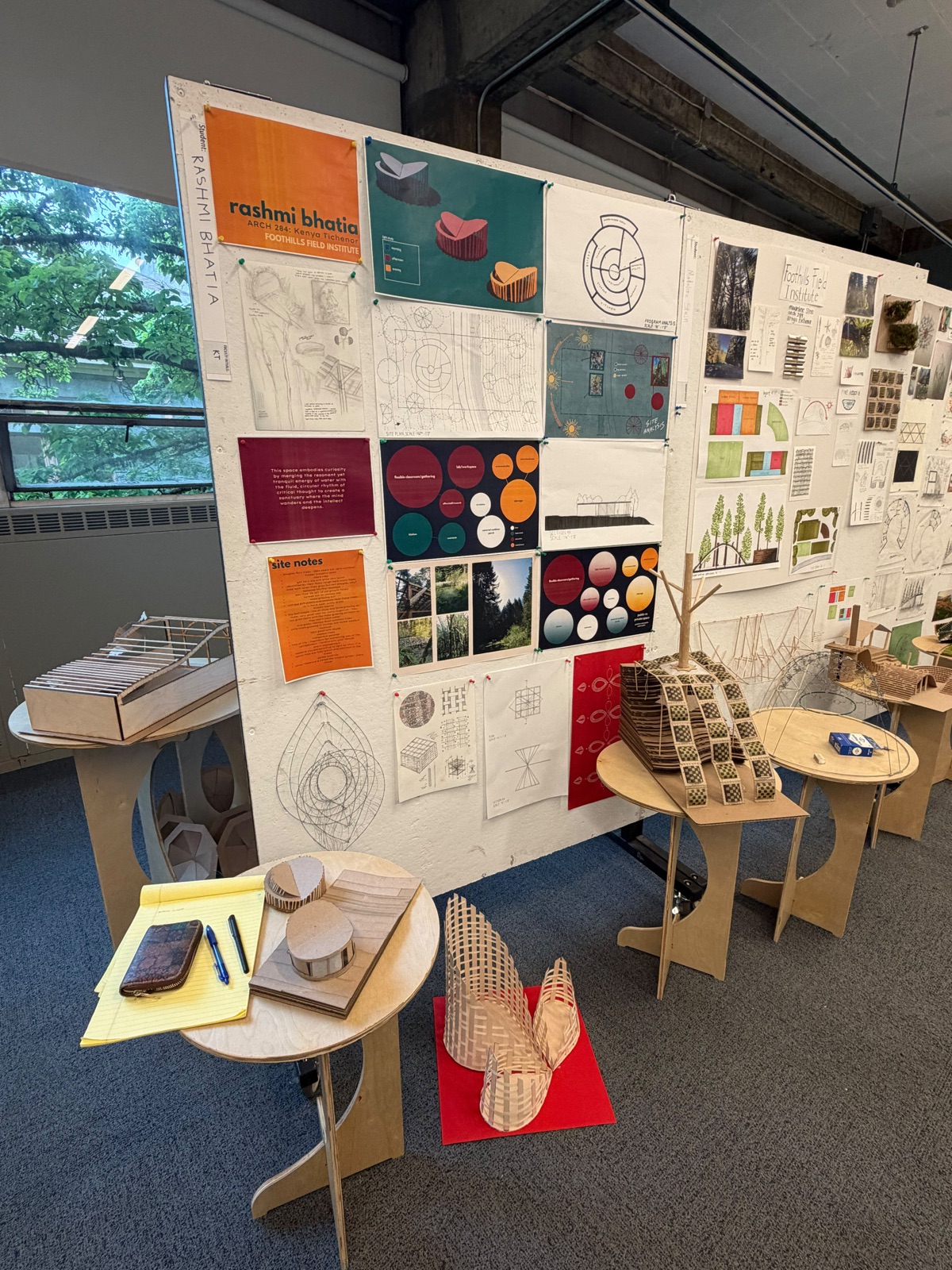
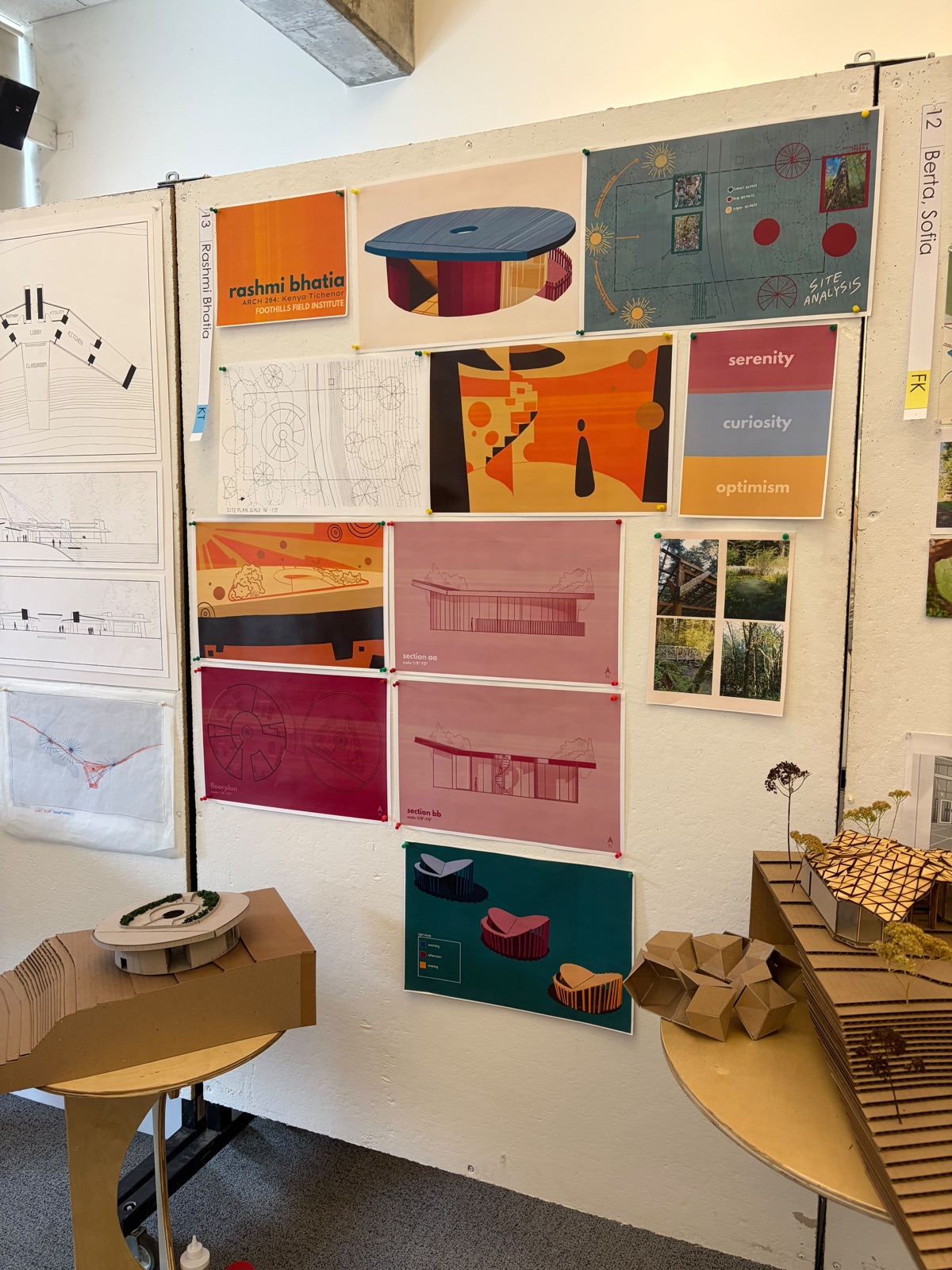
Building on ARCH 283, this studio advances from abstract spatial exercises into an integrated building proposal: the Foothills Field Institute, a public biology research center for students and teachers sited in the foothills. The project resolves a real program through a butterfly roof that harvests rainwater into a site water feature, a rooftop garden, reworked circulation that opens up initially-cramped spaces, and a considered material palette — evolving through midterm and final pinups in response to review feedback.
Studio 03 — ARCH 283 — Architectural Design Studio
This studio fundamentally shifted my perspective on architectural representation, challenging me to view it not merely as a documentation tool but as an active and critical method of spatial analysis. By balancing precise technical hand drafting with atmospheric explorations in charcoal, plaster, and mixed media, I discovered that representation is the foundational language of environmental design.
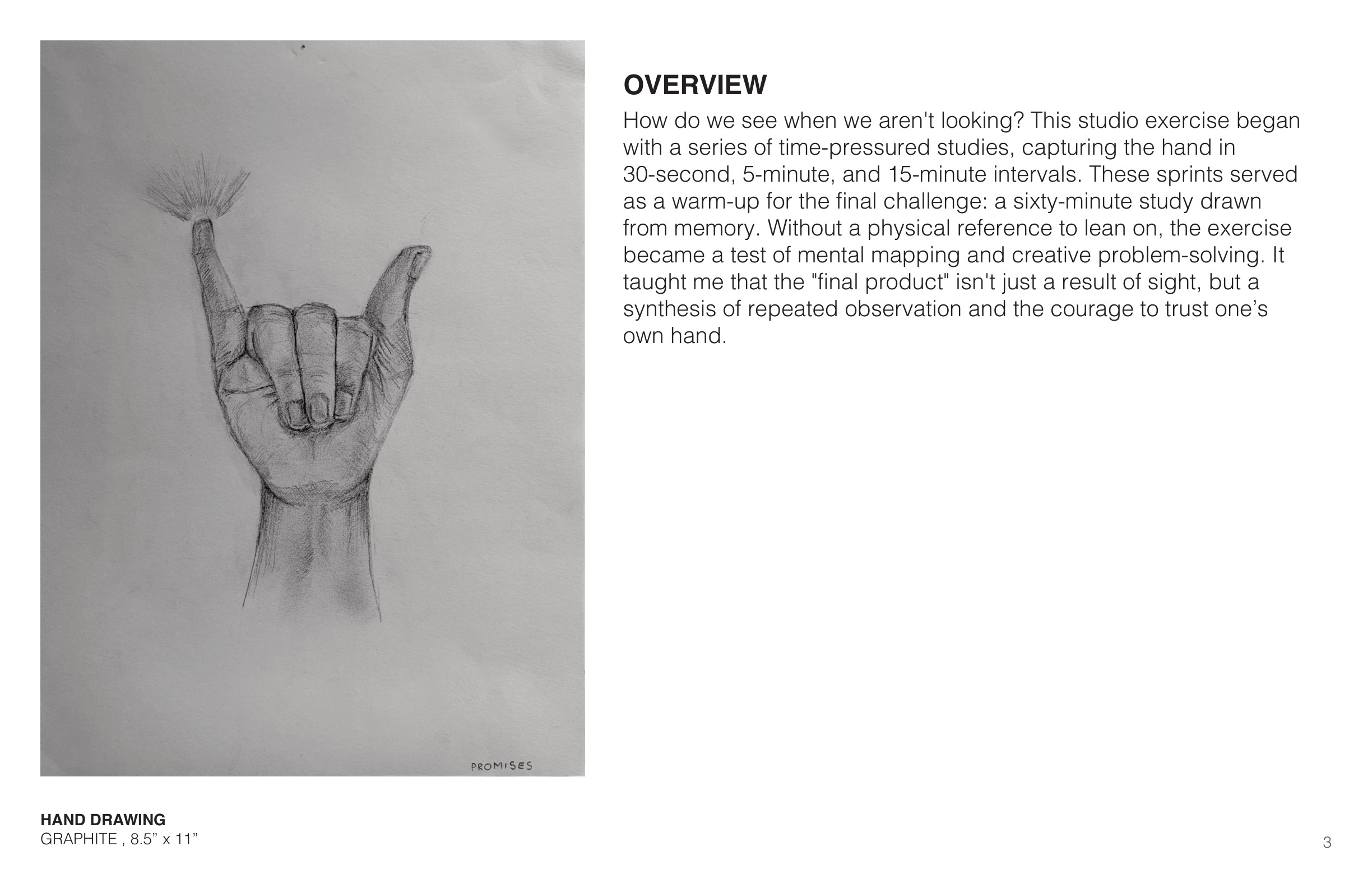
Time-pressured studies capturing the hand in 30-second, 5-minute, and 15-minute intervals, culminating in a 60-minute study drawn entirely from memory — a test of mental mapping and the courage to trust one's own hand.
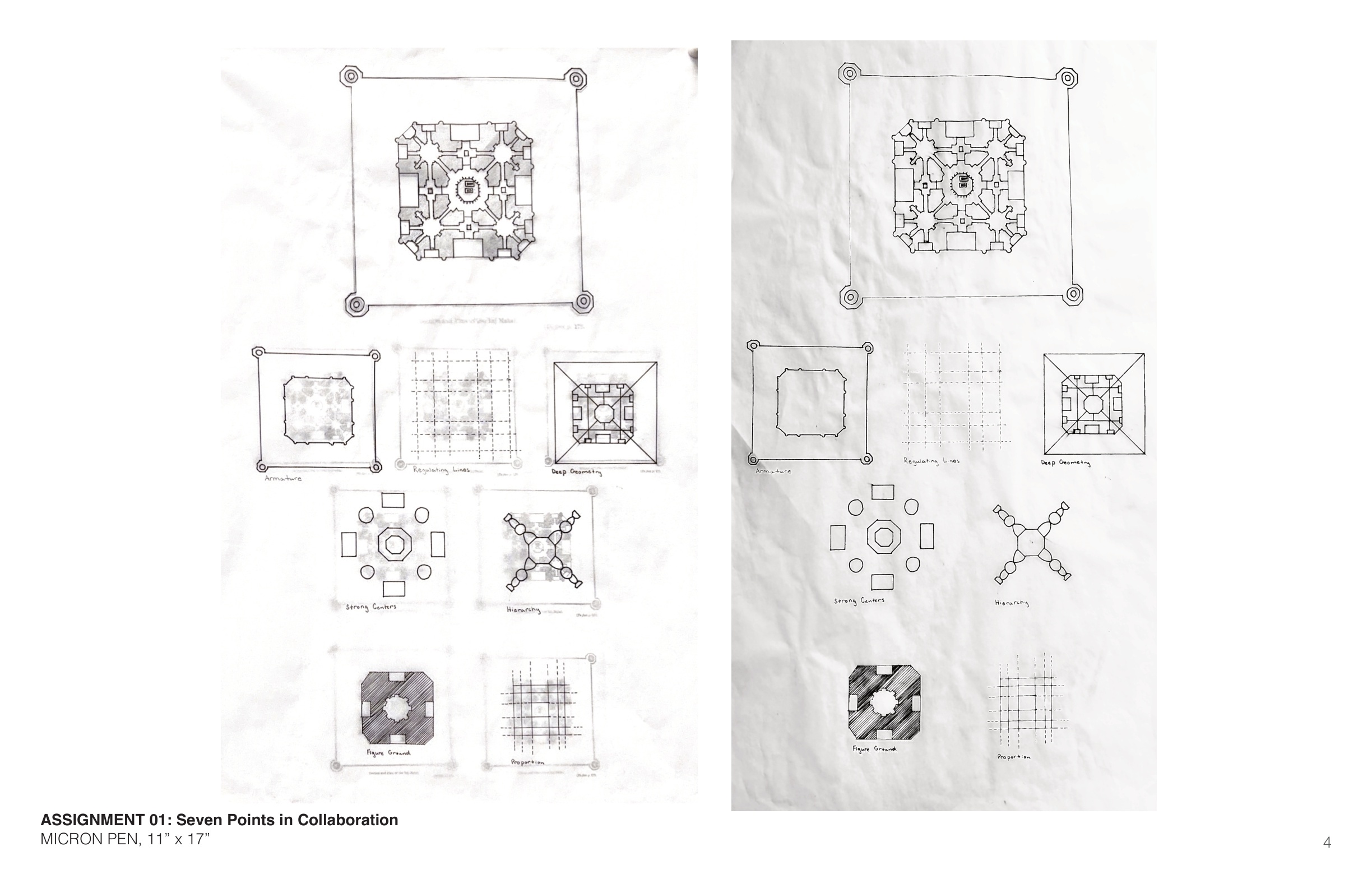
Collaborative drawing exercise exploring how multiple hands and perspectives can converge on a single composition through shared spatial logic.
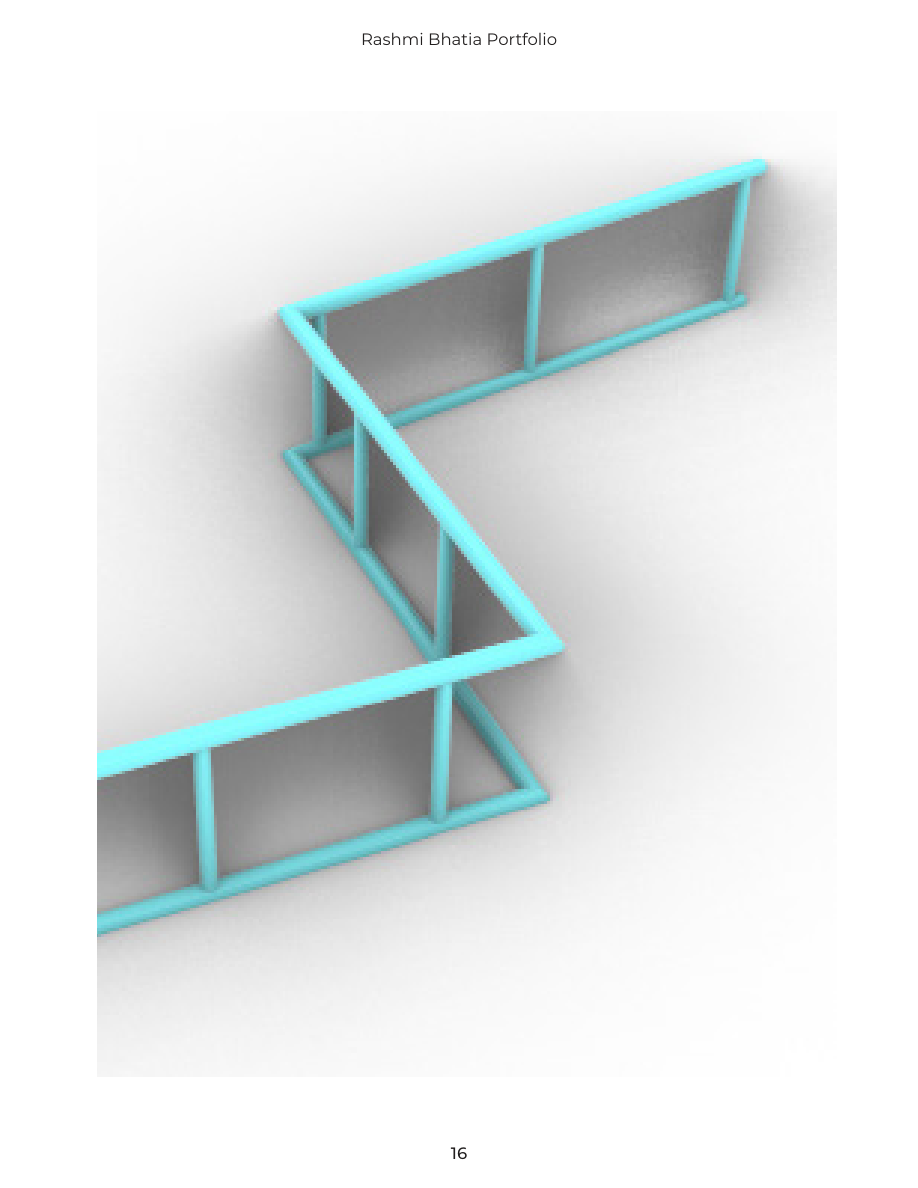
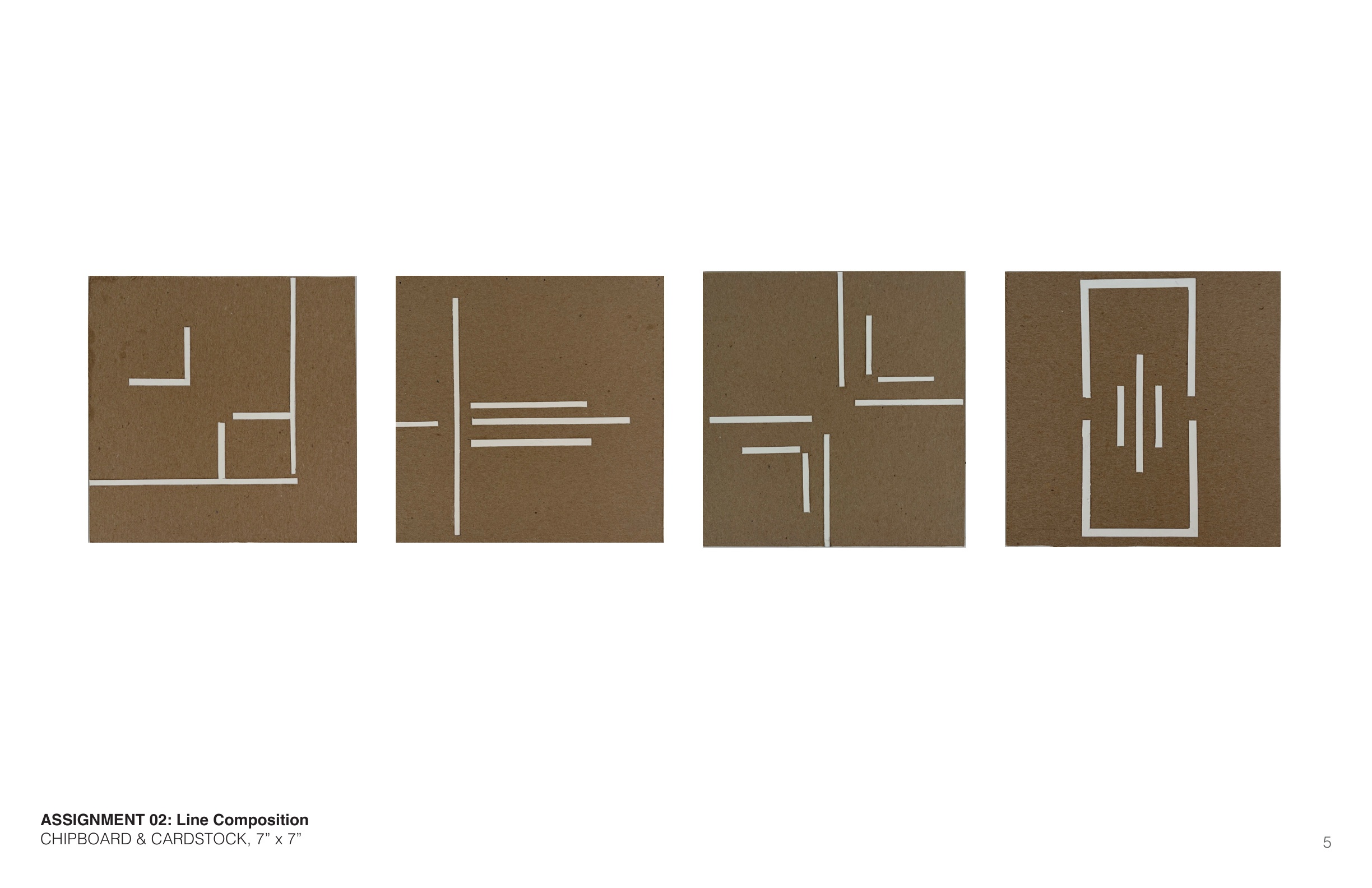
Translating linear relationships into three-dimensional form through chipboard and cardstock, exploring how lines define and divide space.
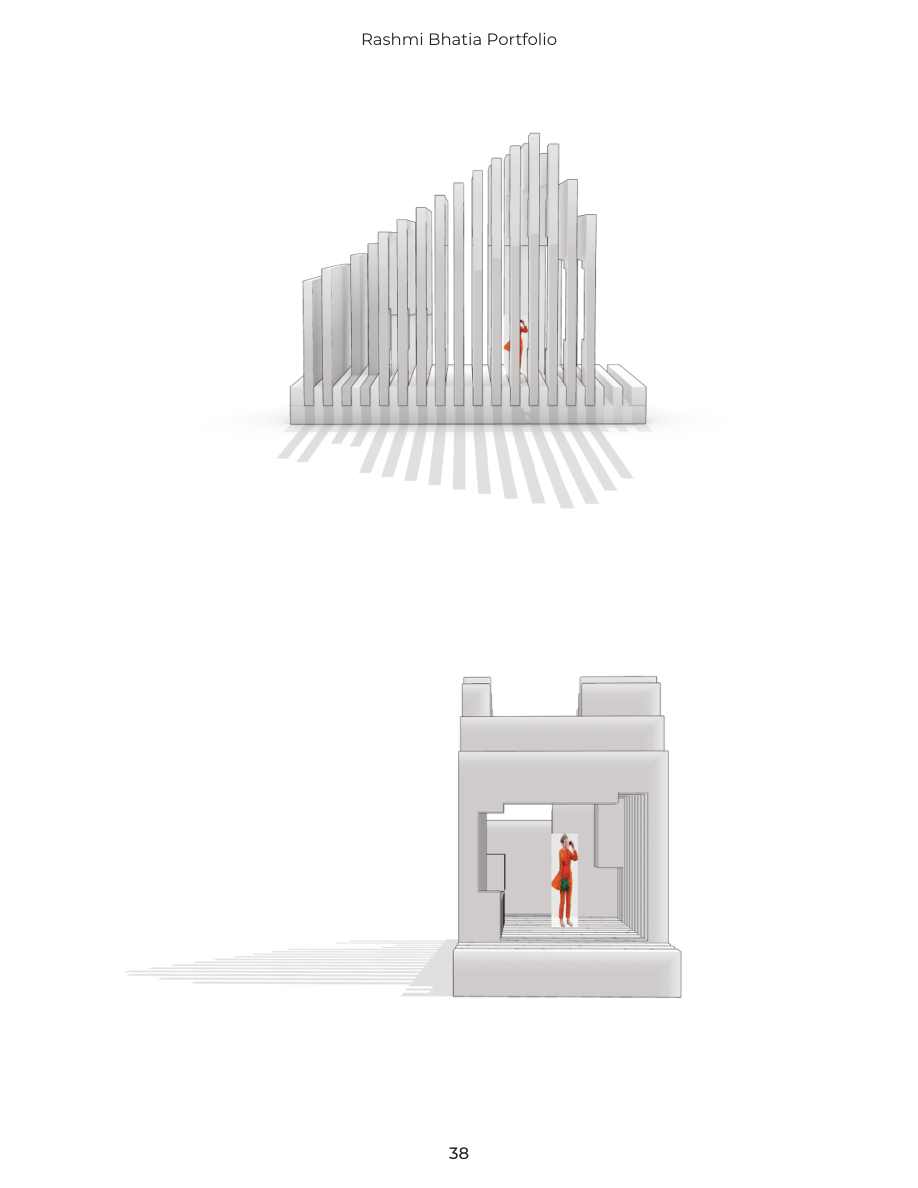
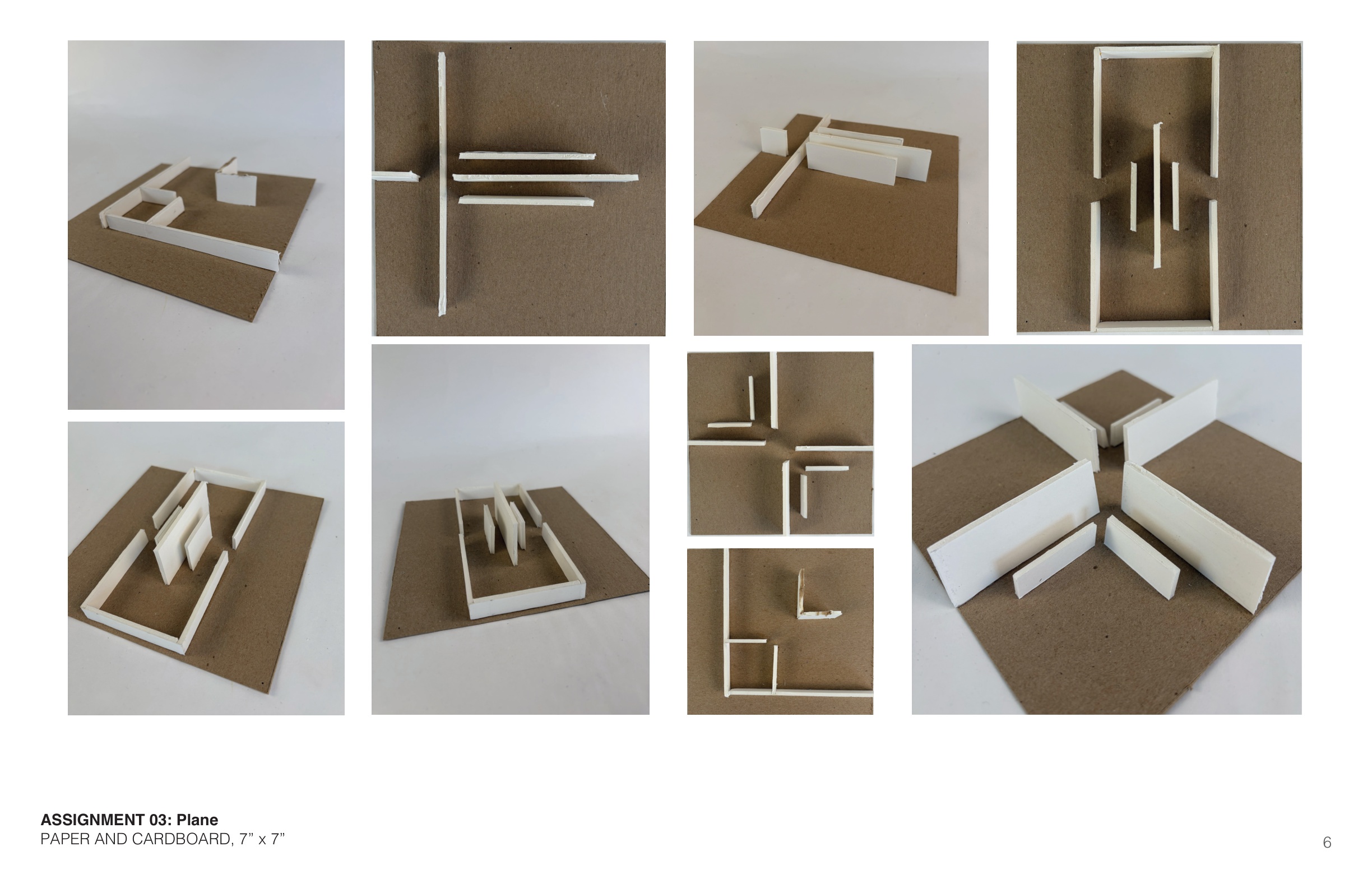
Investigating how planar elements create enclosure, threshold, and spatial hierarchy through paper and cardboard constructions.
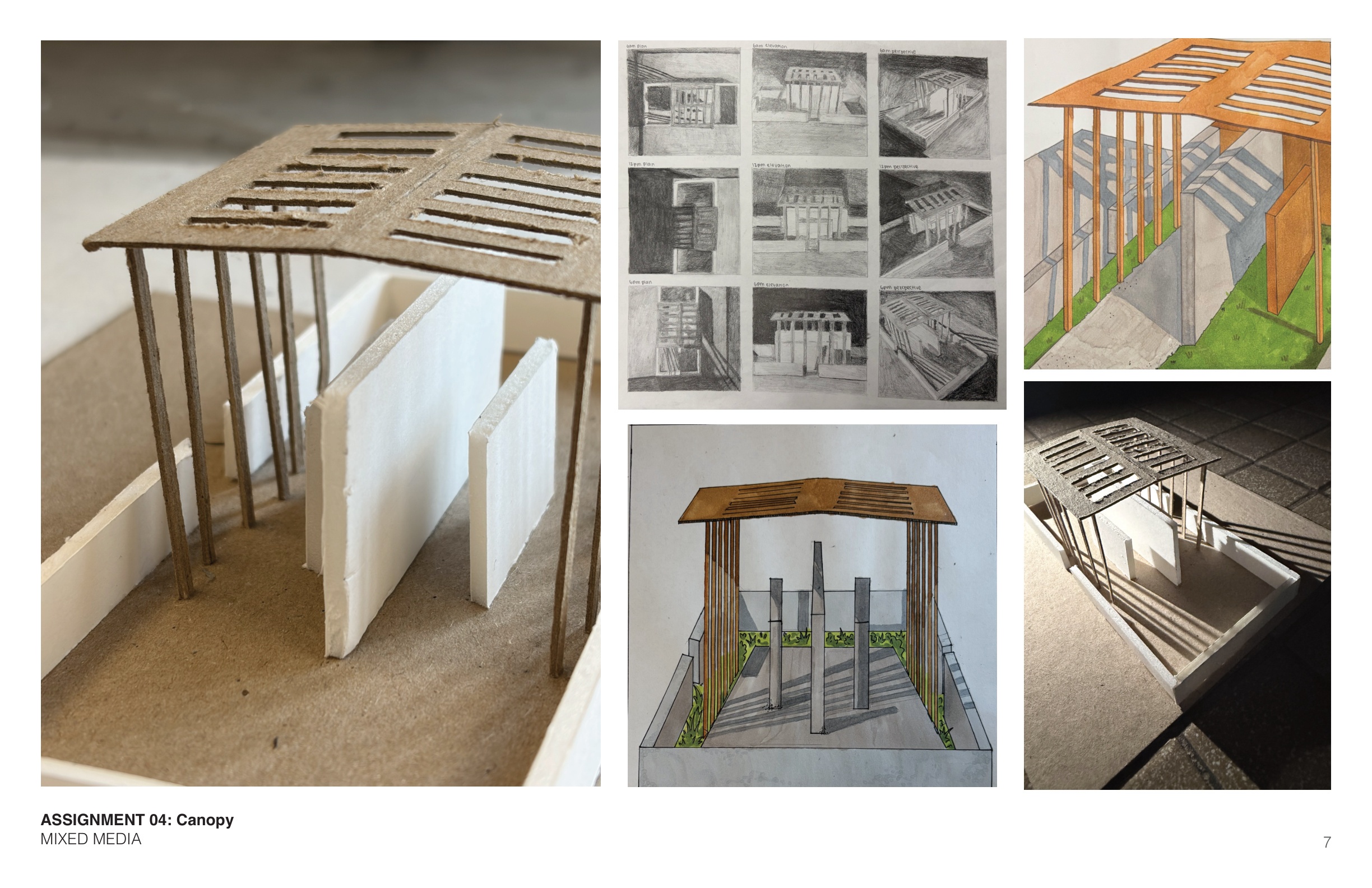
Designing an overhead structure that mediates between interior and exterior, exploring shelter, shade, and the filtering of light through mixed media.
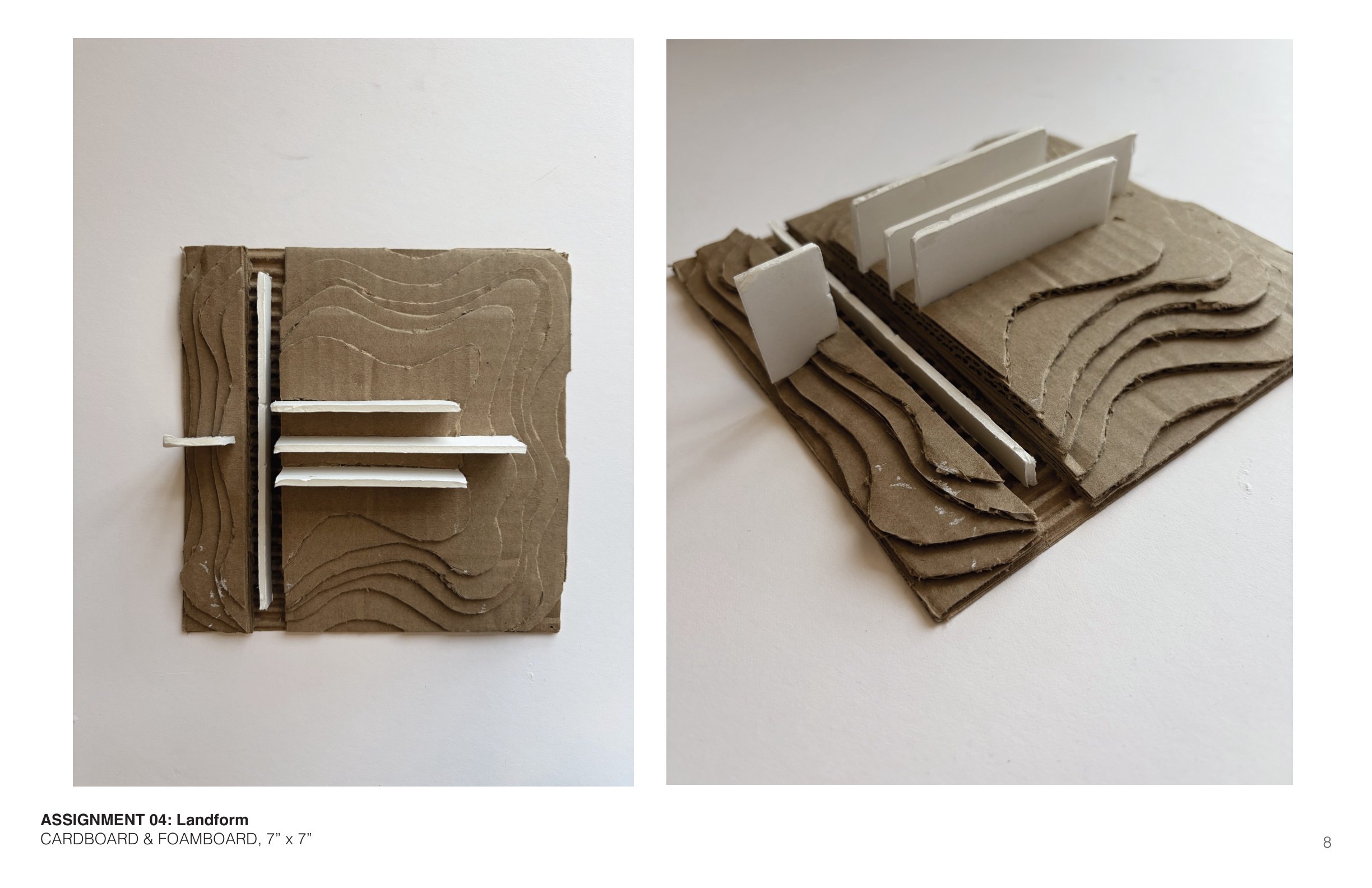
Sculpting terrain to understand how topography shapes architectural decisions — from drainage to views to the experience of ascent and descent.
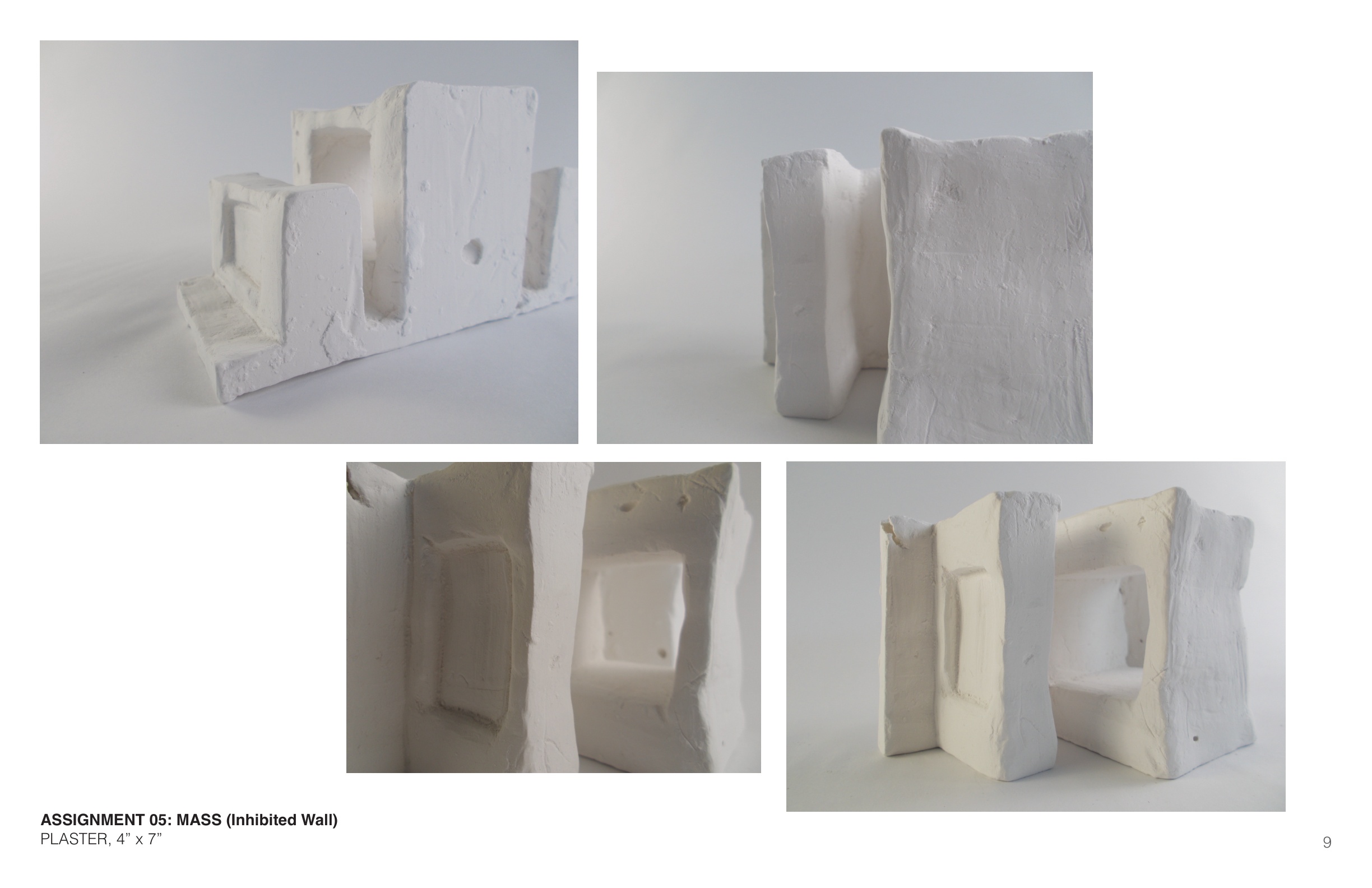
A plaster casting exploring mass, weight, and the carving of space within solid form. Understanding how walls contain, direct, and reveal.
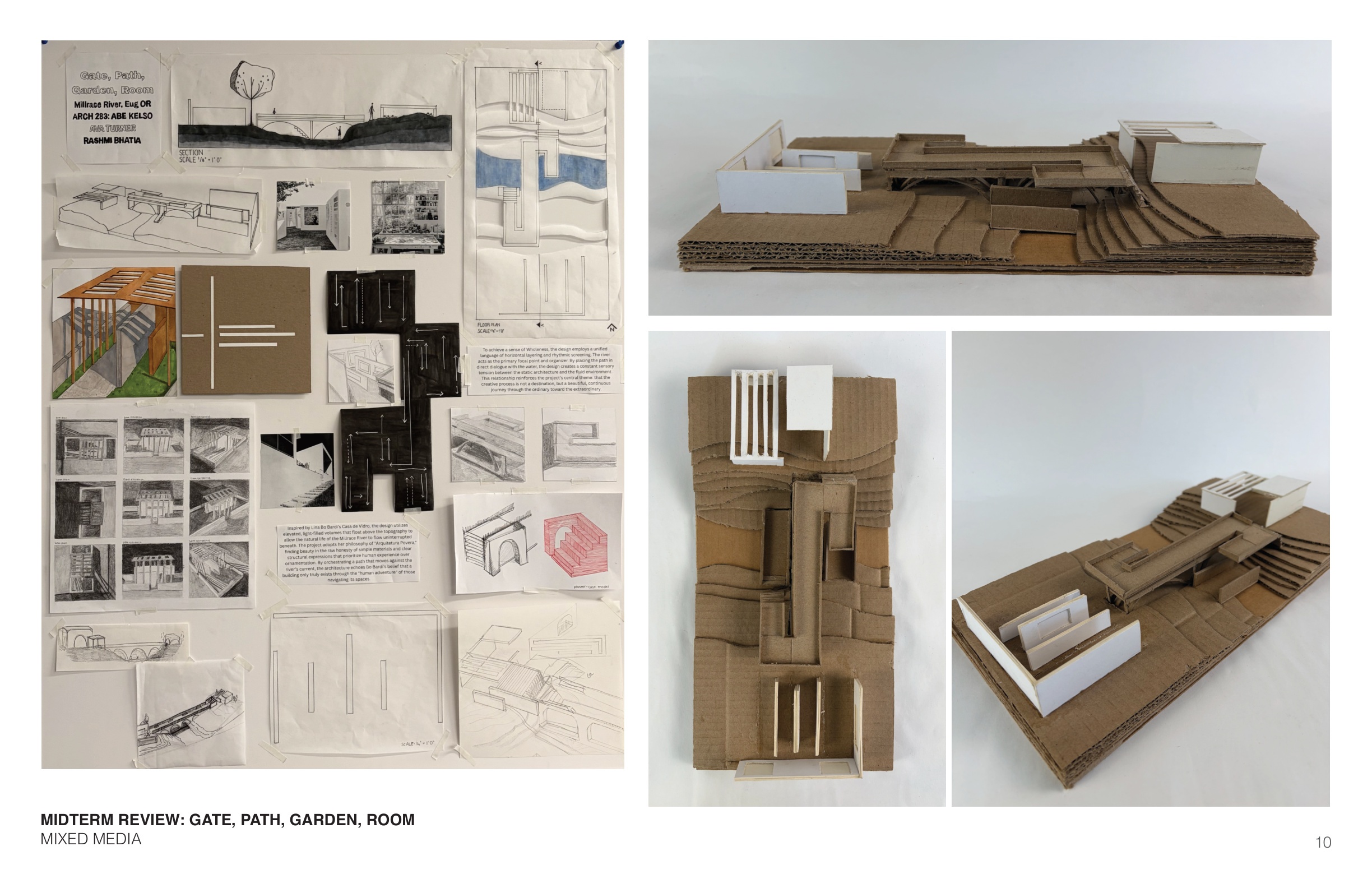
An integrated spatial sequence exploring threshold (gate), movement (path), enclosure (garden), and inhabitation (room) — the fundamental elements of architectural experience.
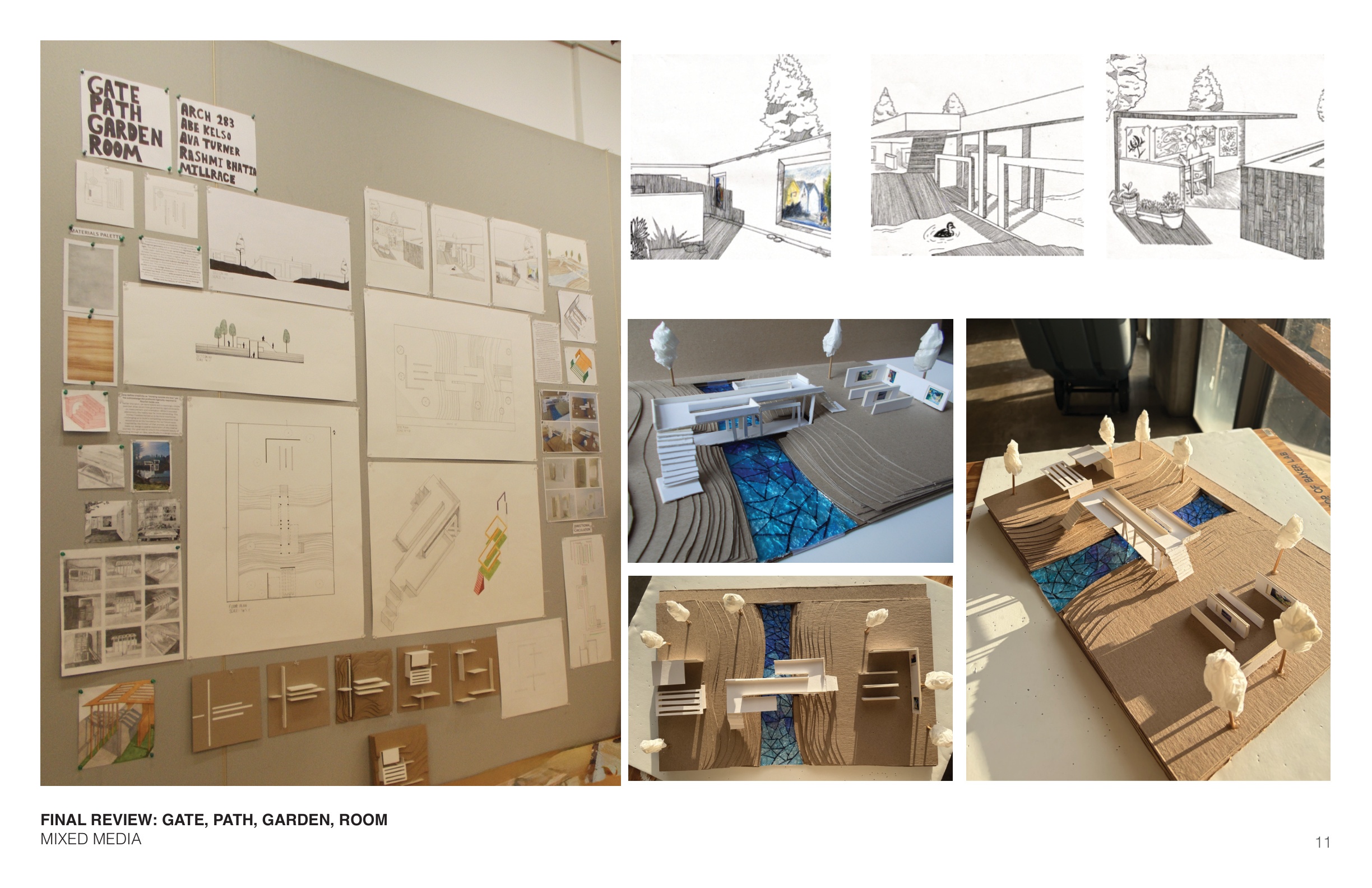
Refined iteration of the spatial sequence, resolving the relationships between threshold, circulation, landscape, and shelter into a cohesive architectural proposition.
Studio 04 — ARCH 202 — Design Skills
This course transformed my perception of the built environment, highlighting the minuscule architectural details that many overlook. By engaging with techniques like orthographic and paraline projection, color media, and physical model making, I came to understand how aesthetic beauty can coexist within a structurally sound, livable space.
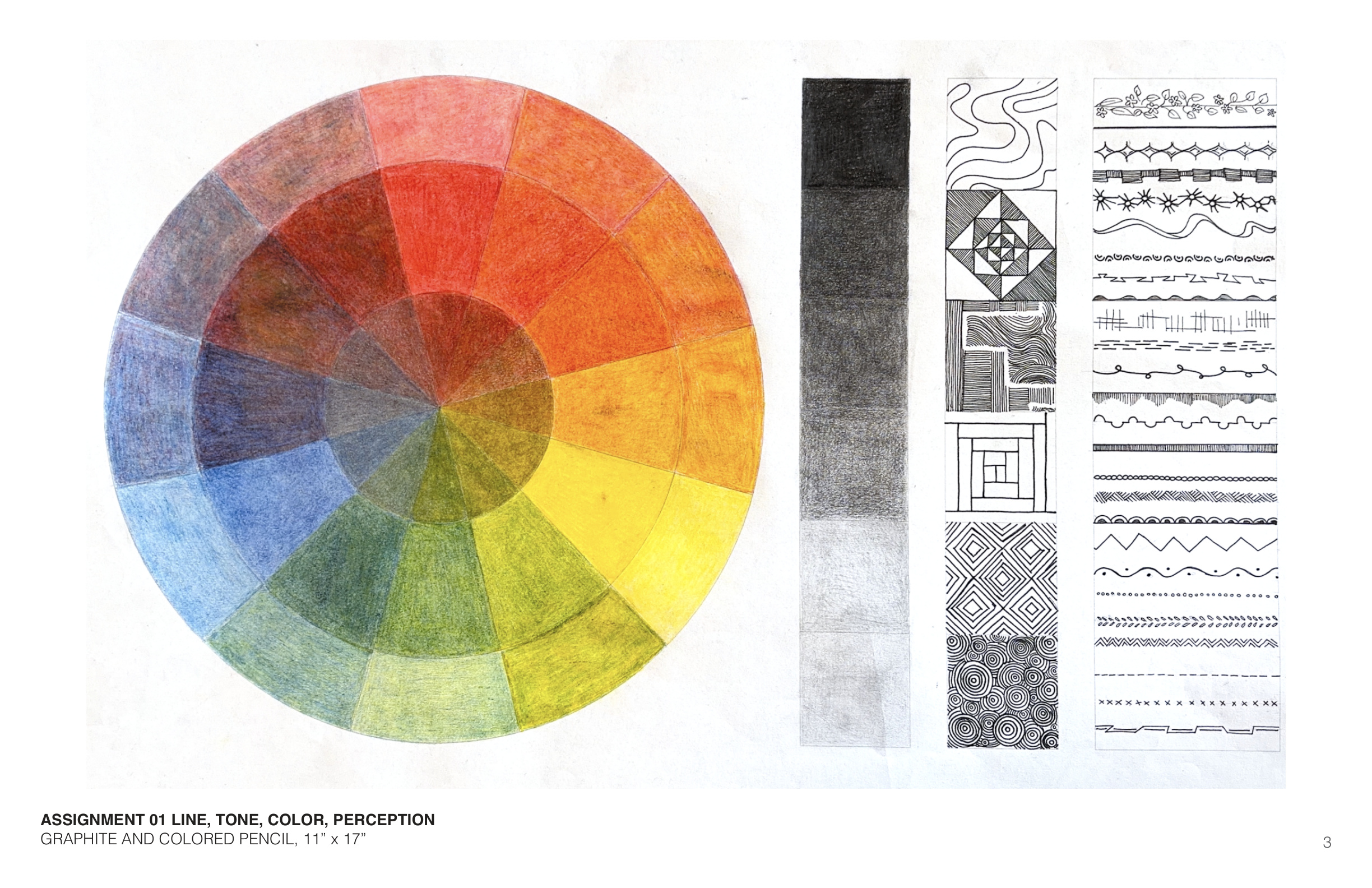
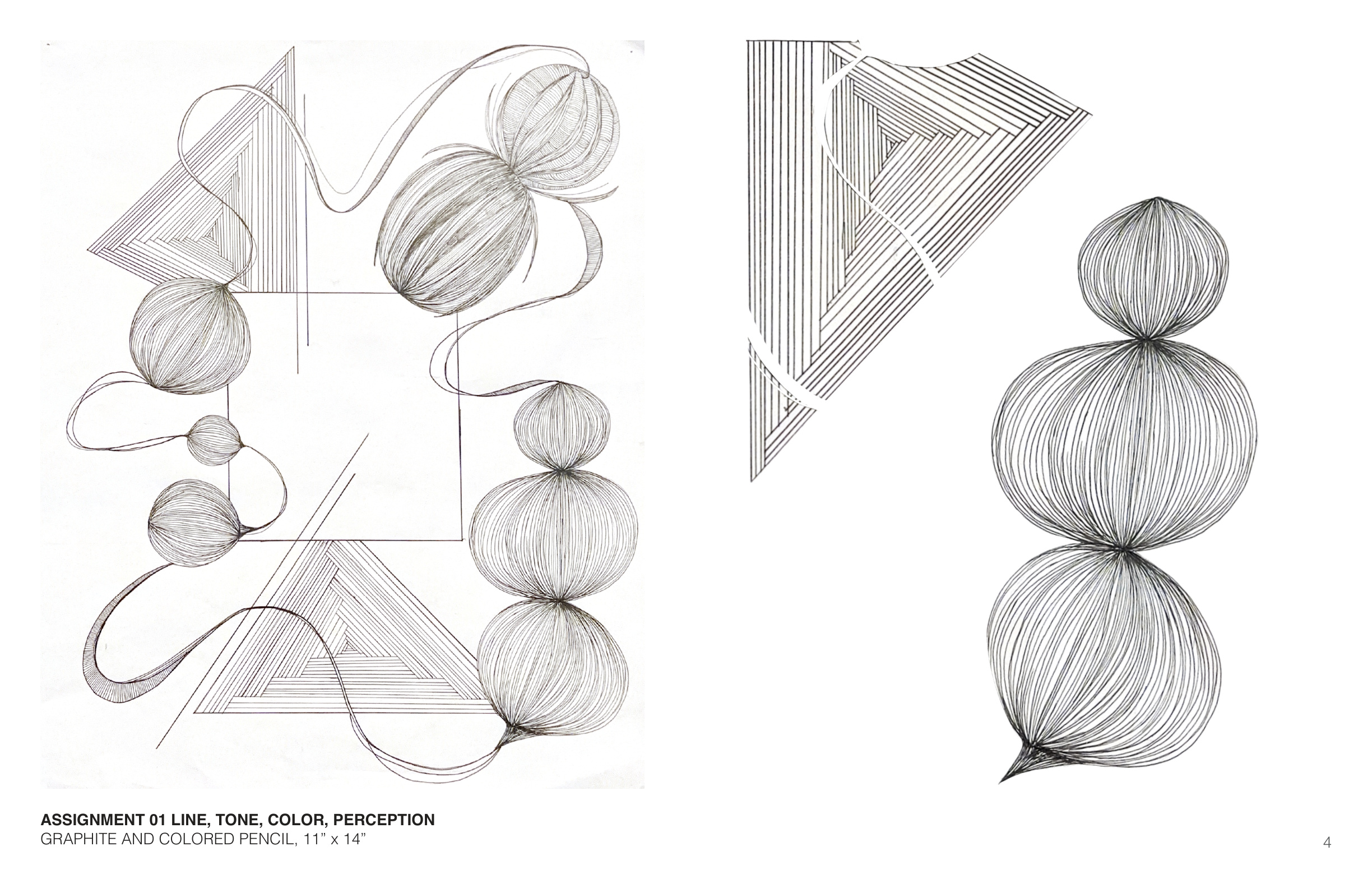
Explorations in graphite and colored pencil examining fundamental elements of visual perception and architectural representation.
Further investigations into how line weight, tonal value, and color interact to create depth and spatial understanding.
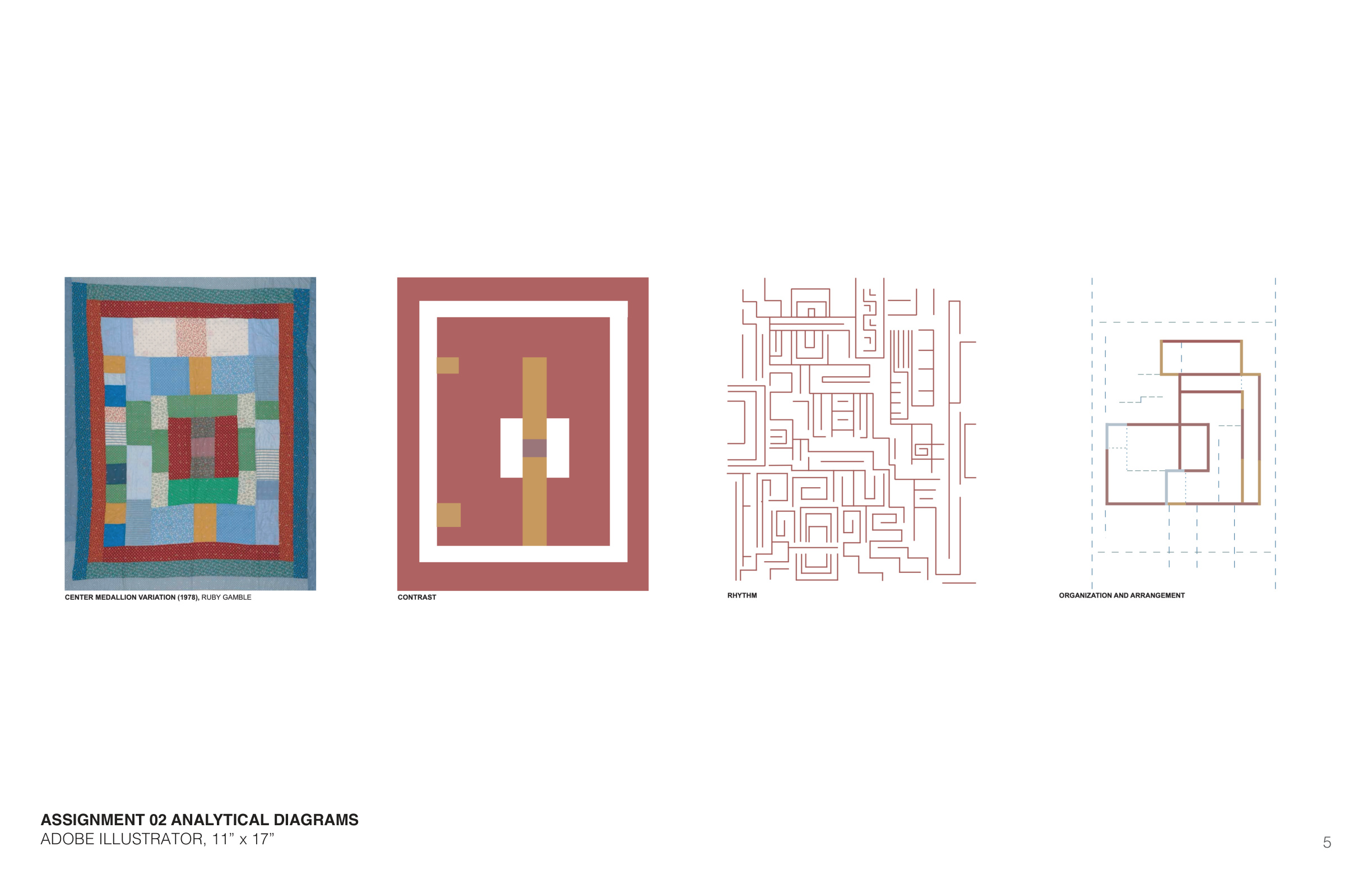
Digital diagramming exploring architectural analysis through abstraction. Translating spatial relationships into clear visual communication.
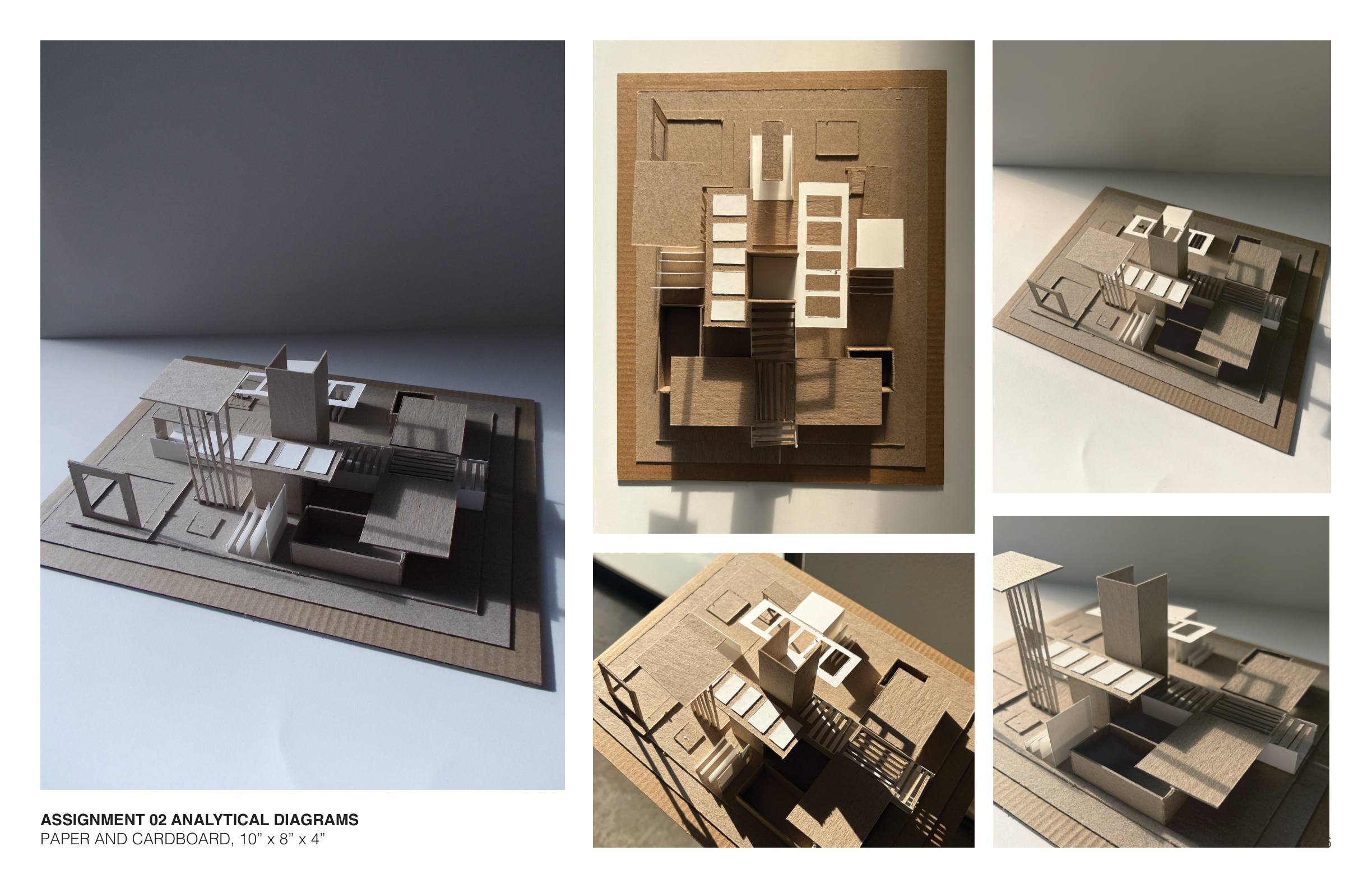
Three-dimensional interpretation of analytical diagrams, translating 2D analysis into a physical cardboard and paper model.
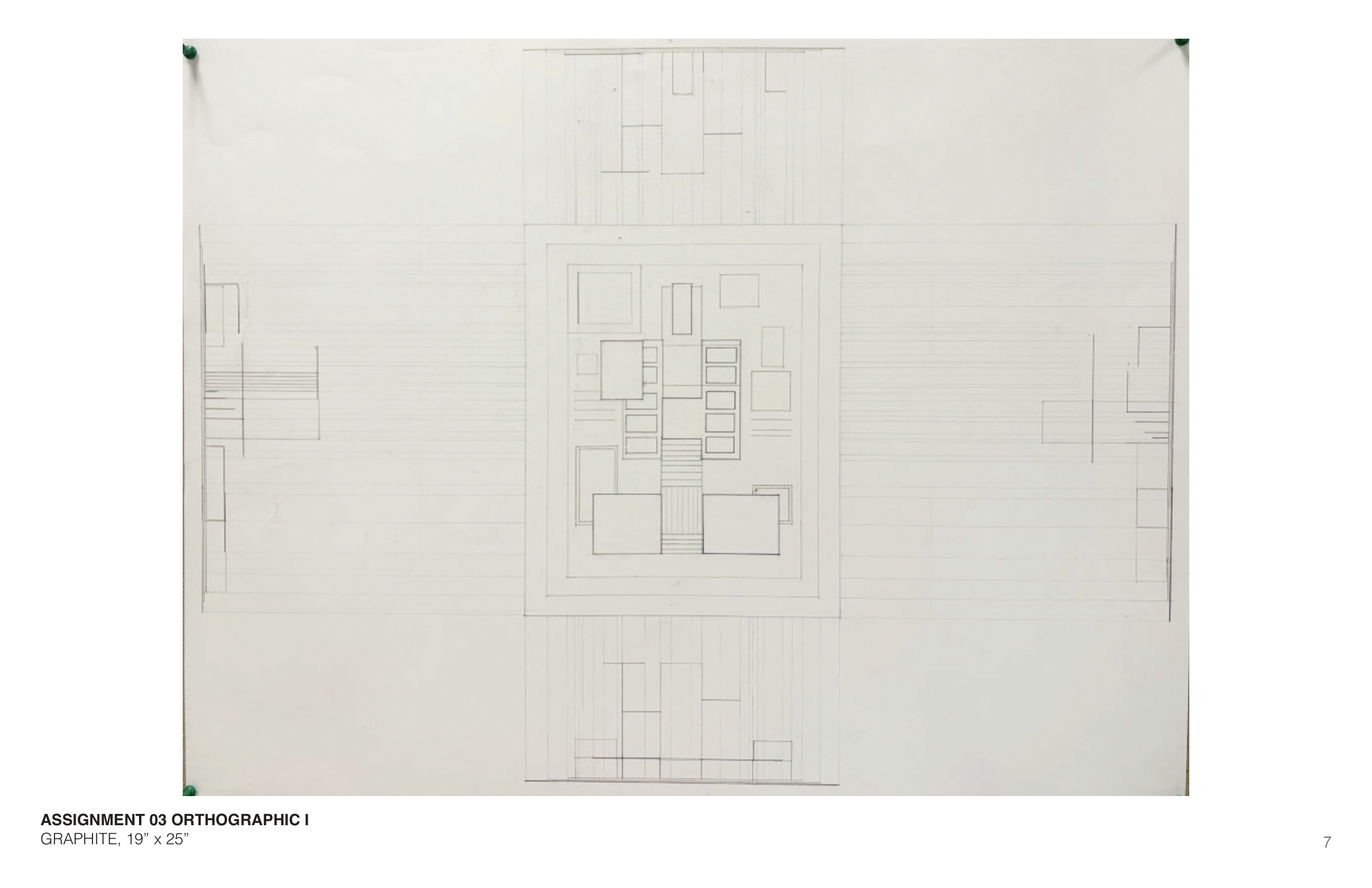
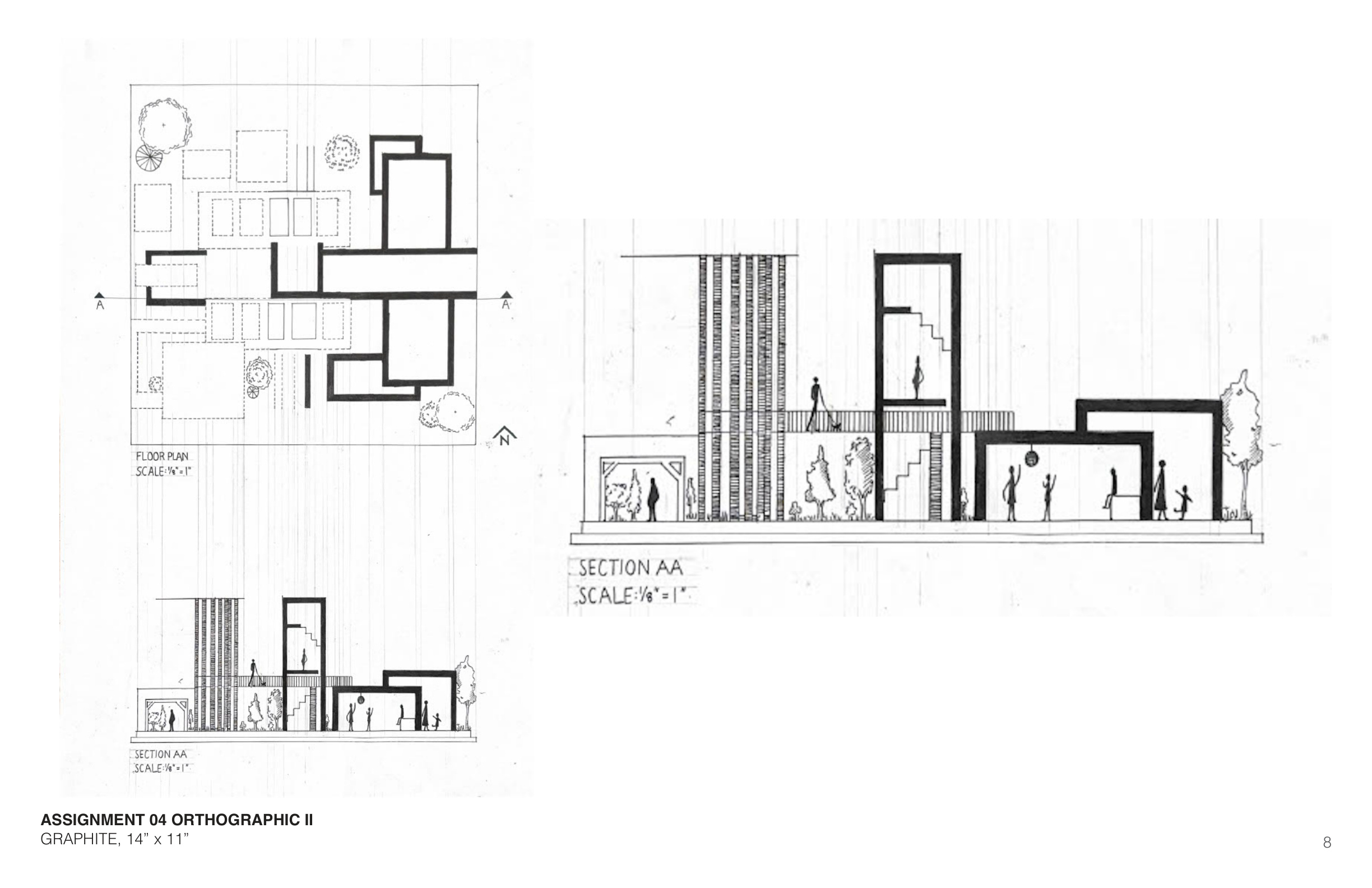
Plan, section, and elevation drawings rendered in graphite. Understanding how buildings are documented through precise orthographic projection.
Advanced orthographic projection exploring more complex building forms and the relationship between plan and elevation.
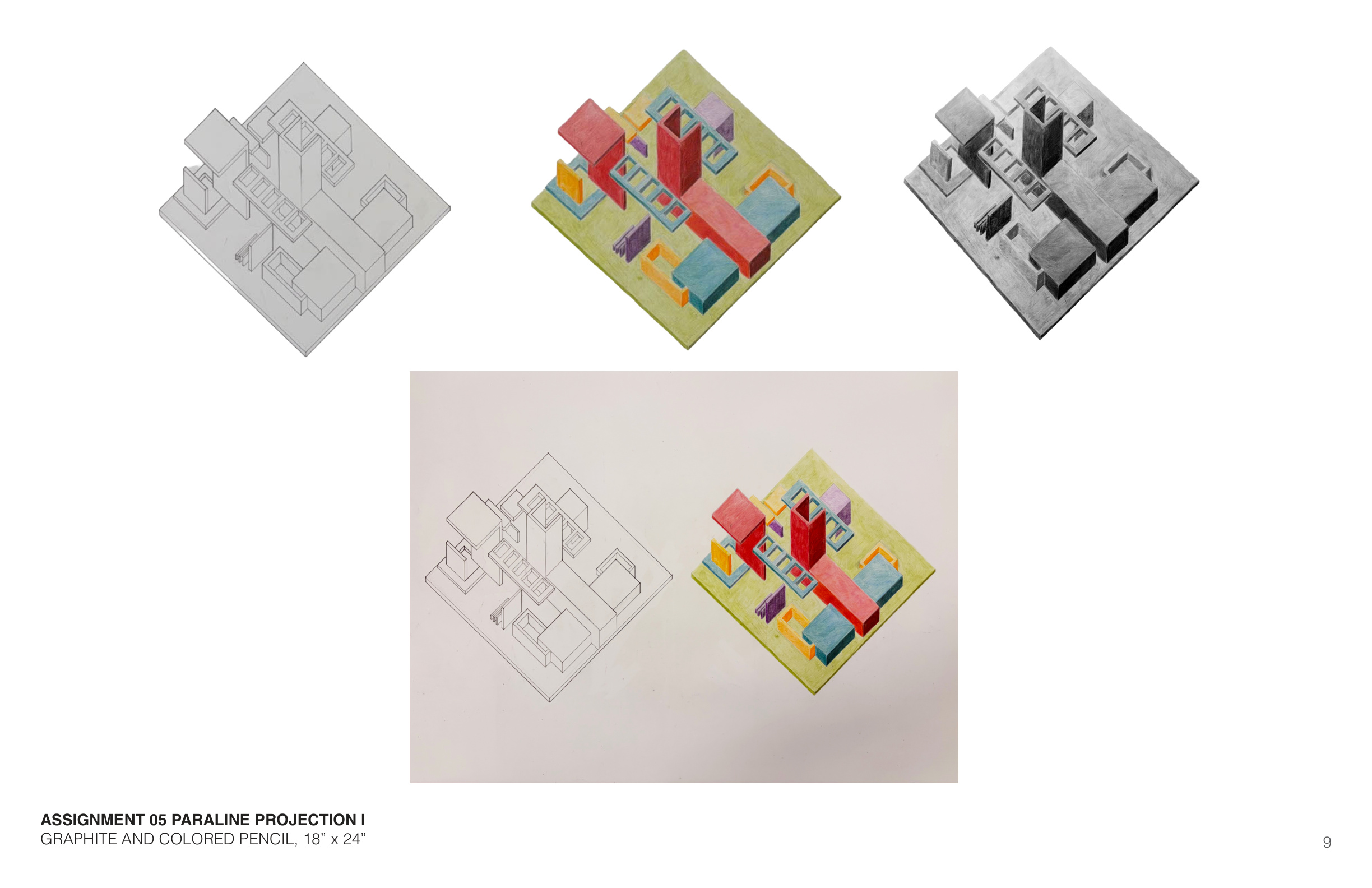
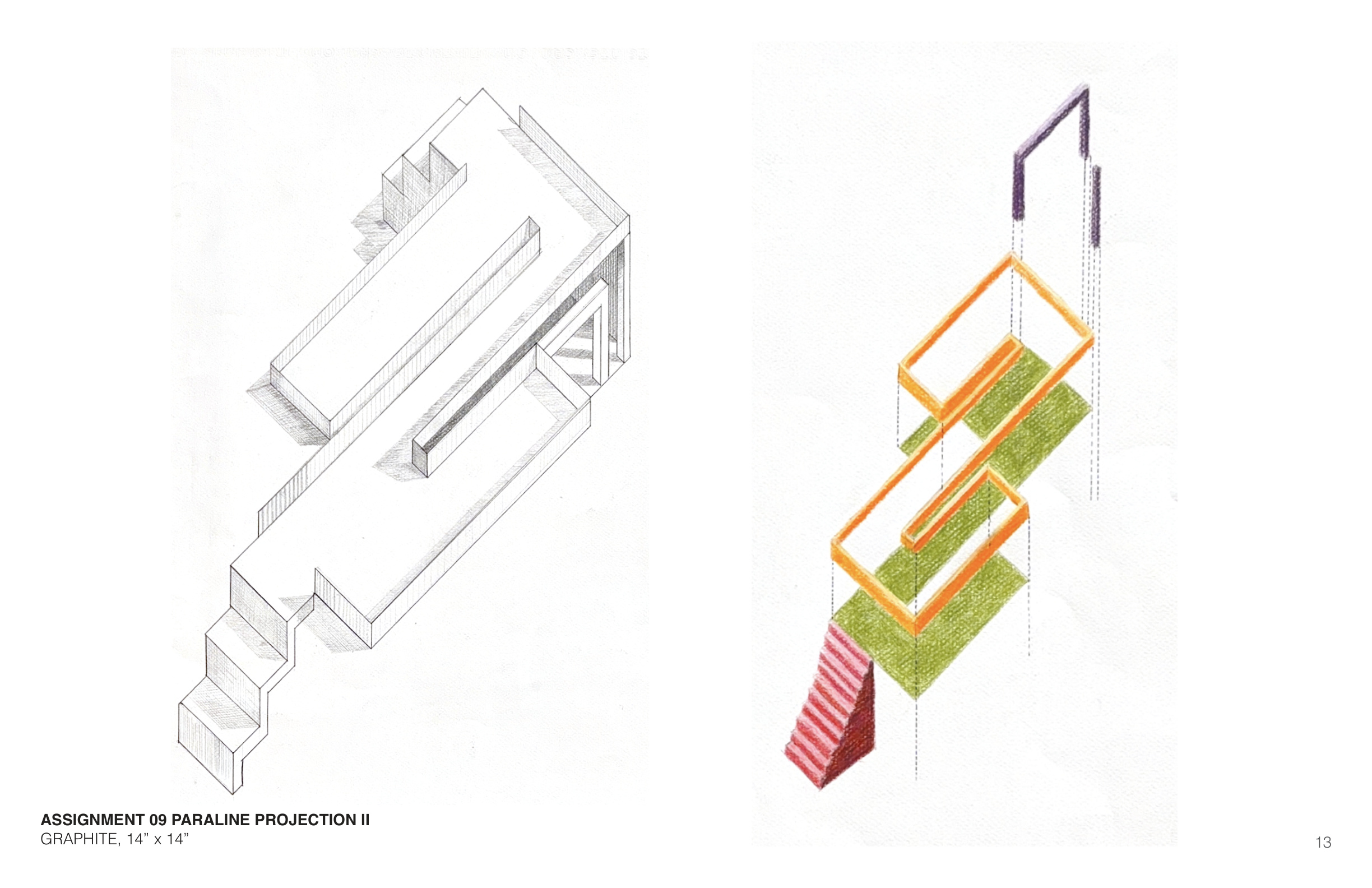
Axonometric and isometric drawings combining graphite precision with colored pencil to reveal three-dimensional spatial relationships.
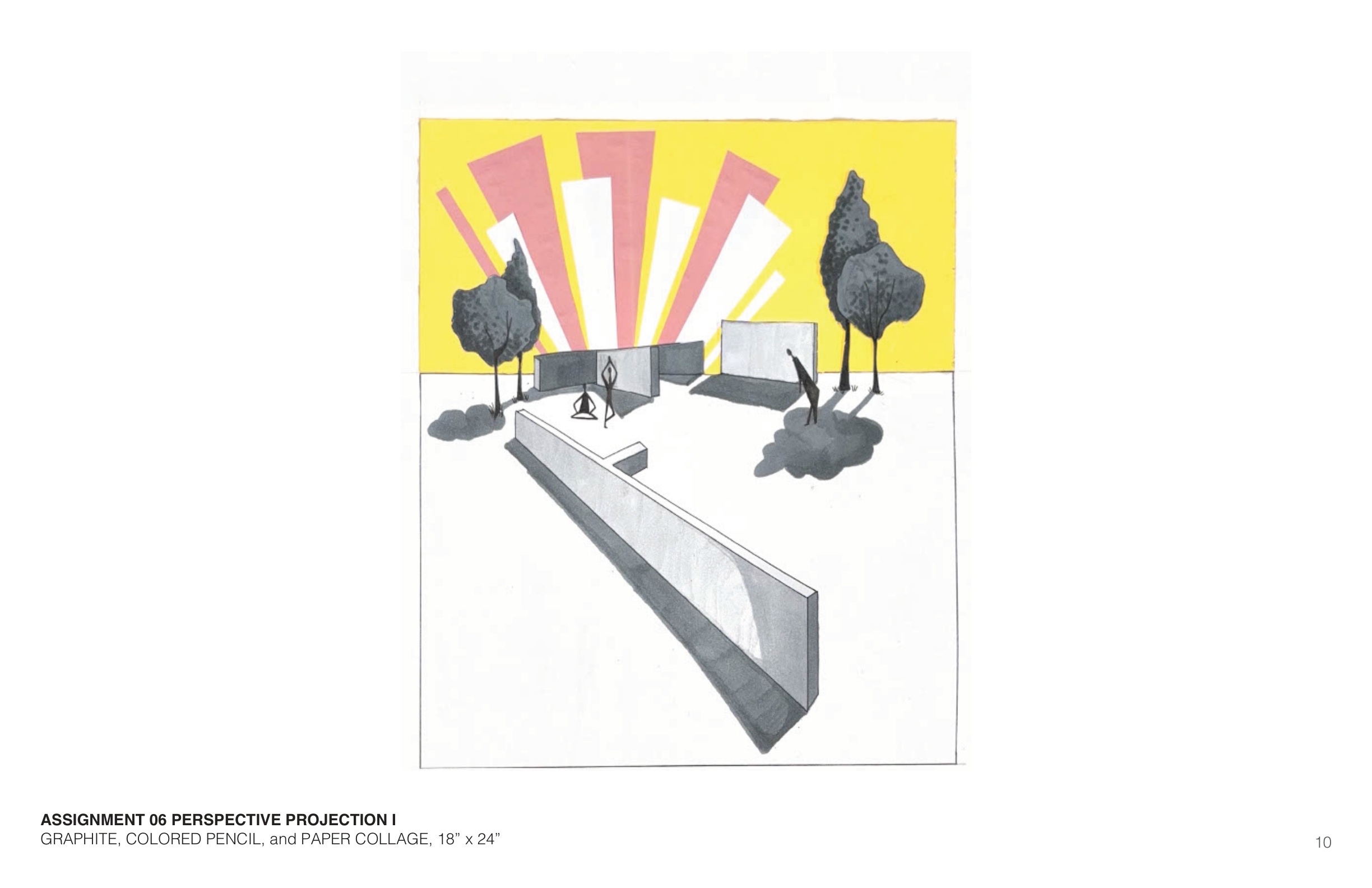
Perspective drawing enriched with paper collage, bringing depth and materiality to architectural visualization through mixed media.
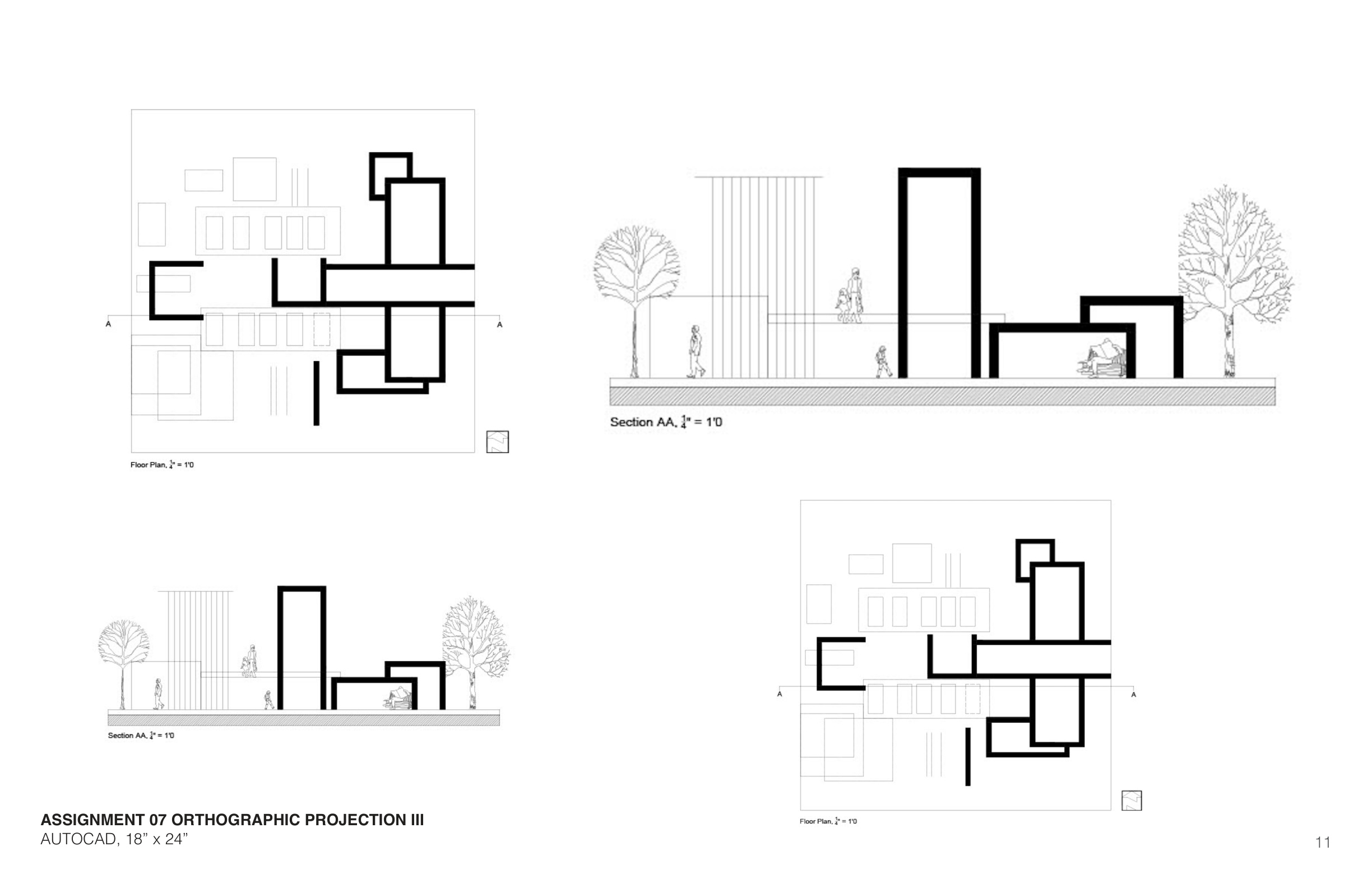
Transitioning from hand to digital: precise orthographic drawings produced in AutoCAD, bridging traditional skills with industry-standard tools.
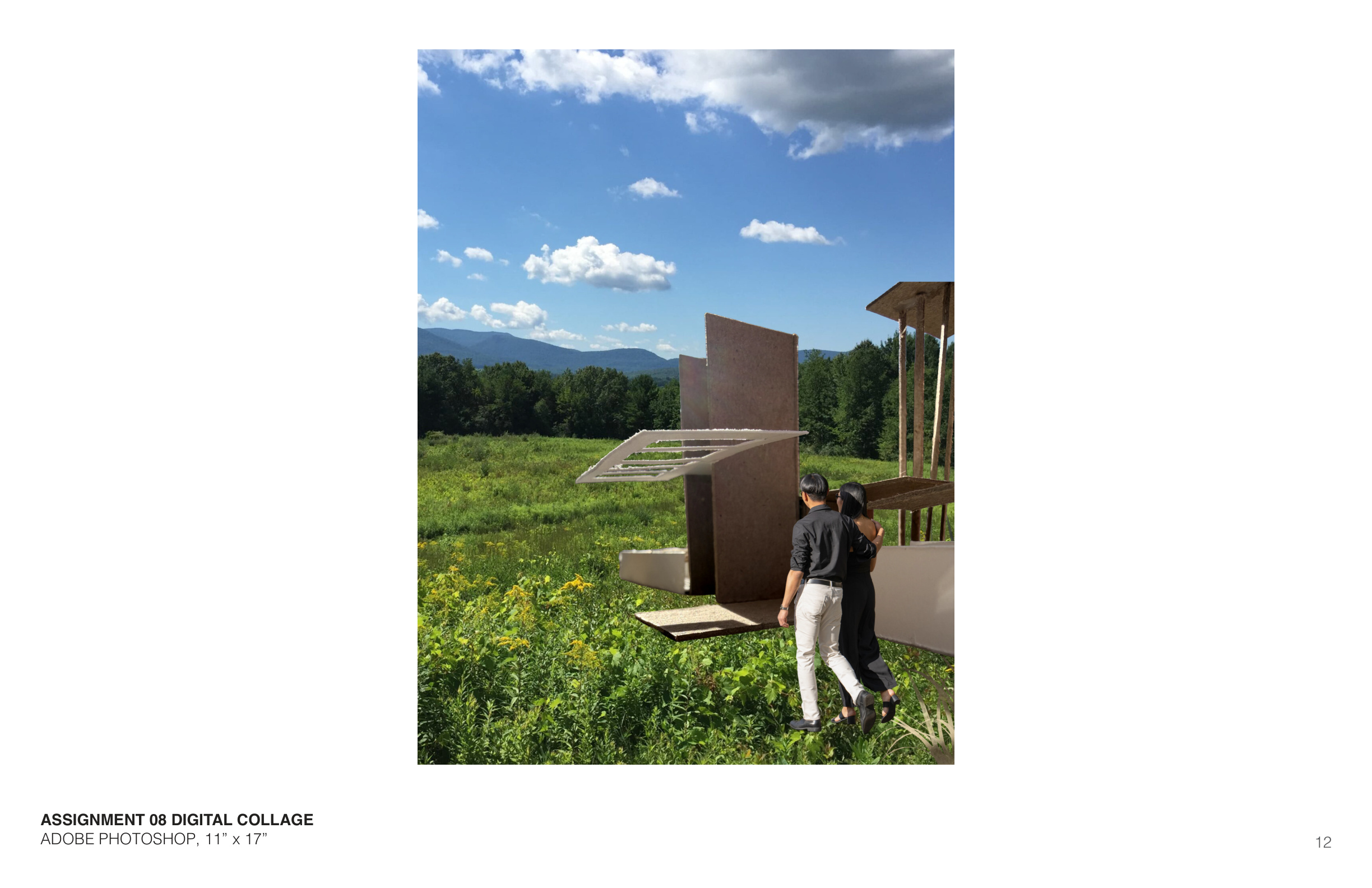
Compositing imagery in Photoshop to create evocative architectural narratives through layering, texture, and digital manipulation.
Advanced paraline drawing in graphite demonstrating refined technique and deeper understanding of three-dimensional representation.
Studio 05 — Architecture Studio
Studio coursework ranging from photographic composition and diagramming to physical model building, city design, and live-work structures. These projects explore materiality, light, spatial sequence, and the relationship between people and the built environment.
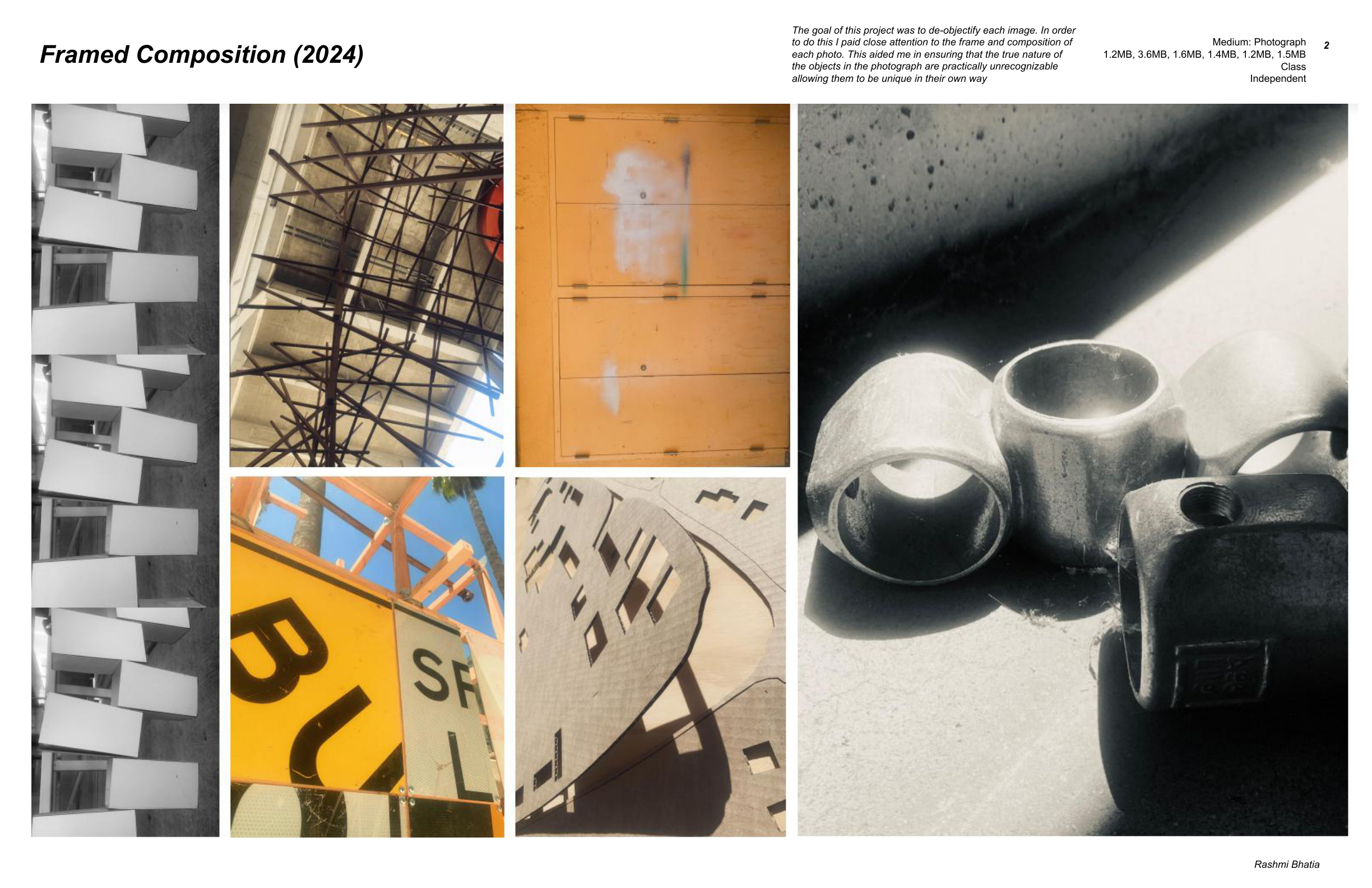
De-objectifying everyday imagery through careful framing and composition, rendering objects practically unrecognizable and unique in their own way.
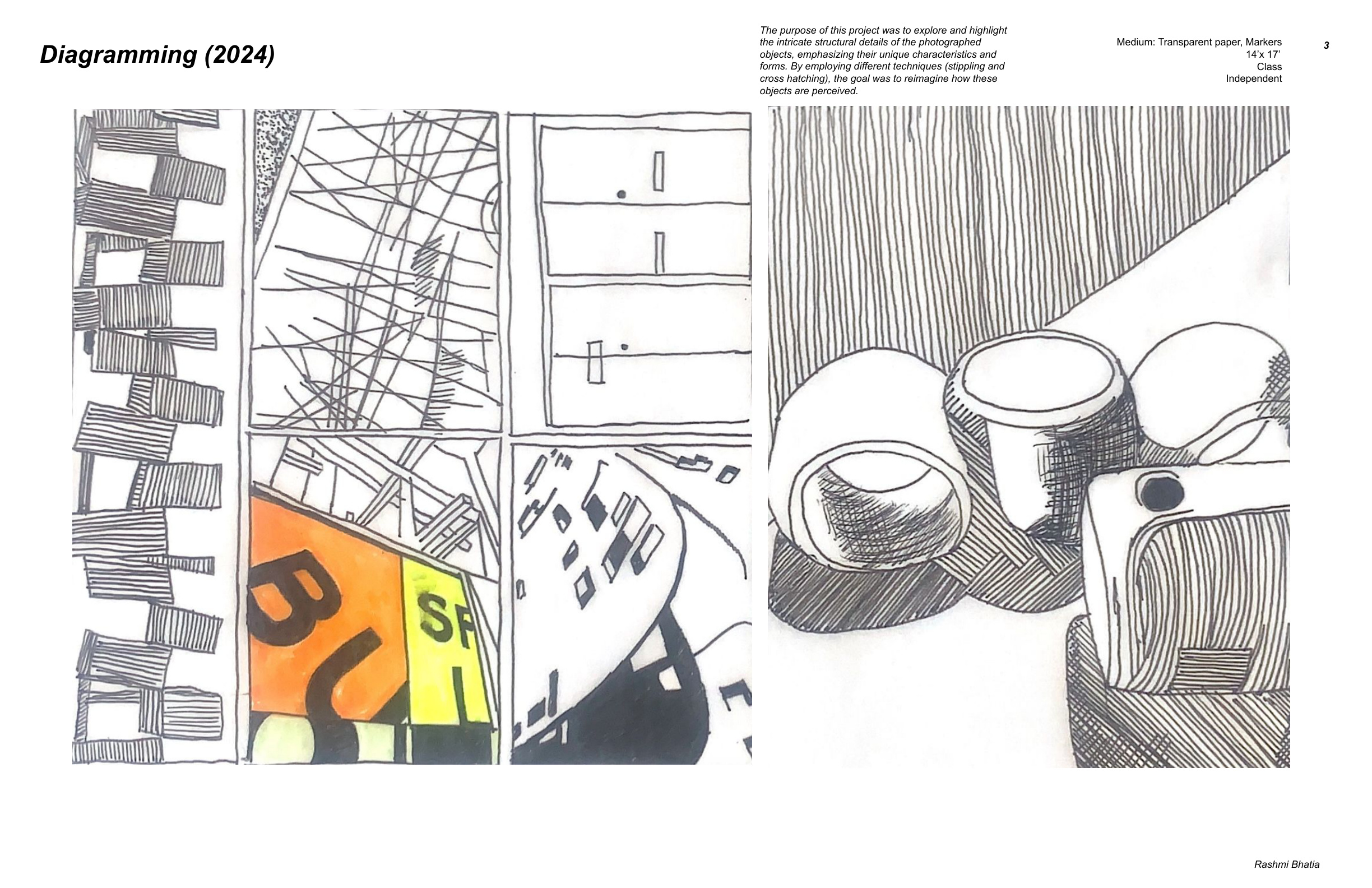
Exploring intricate structural details through stippling and cross-hatching on transparent paper, reimagining how objects are perceived.
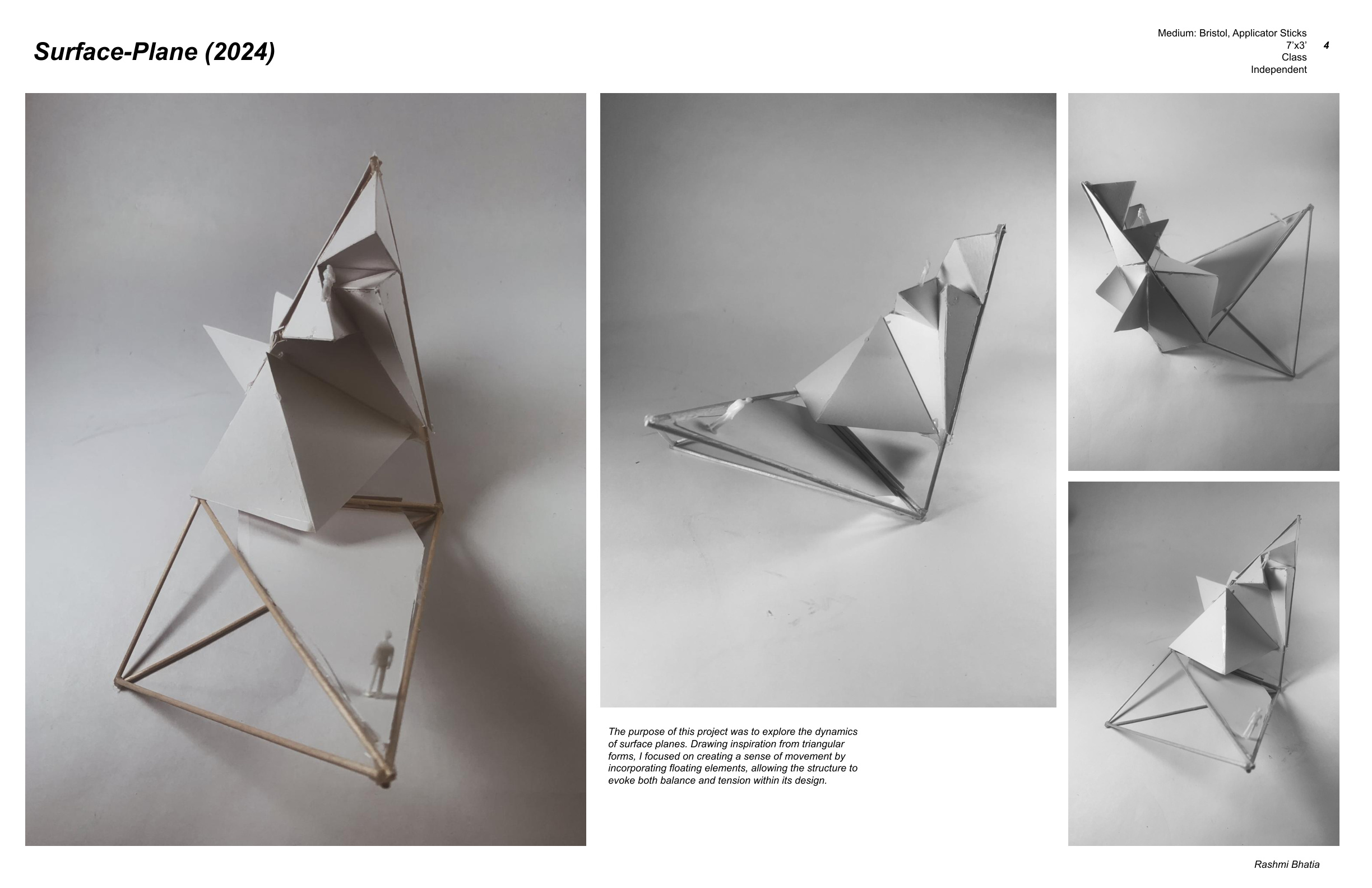
Exploring the dynamics of surface planes through triangular forms, creating a sense of movement with floating elements that evoke balance and tension.
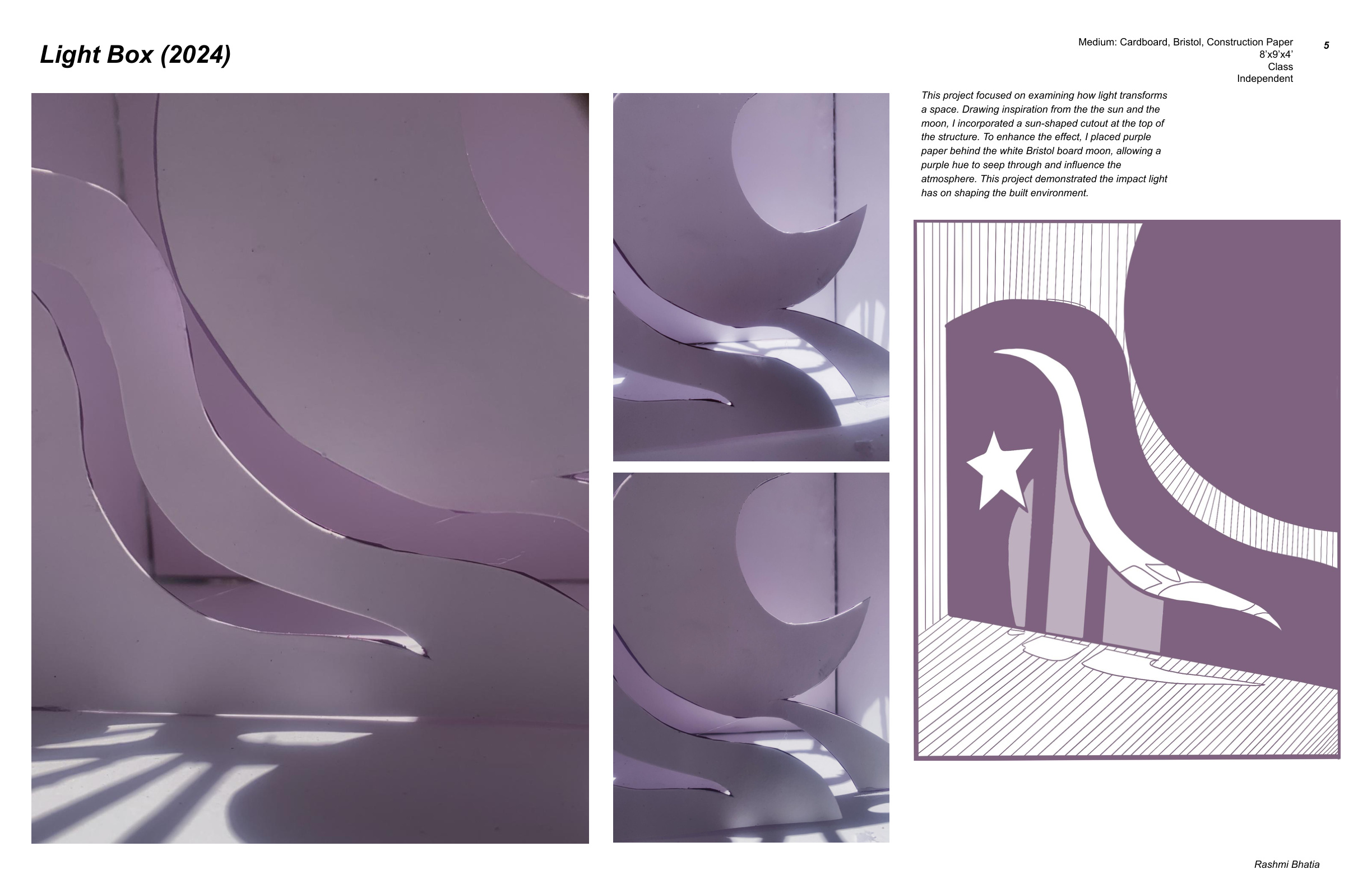
Examining how light transforms space. A sun-shaped cutout casts light while purple paper behind a Bristol moon creates atmospheric color — demonstrating light's impact on the built environment.
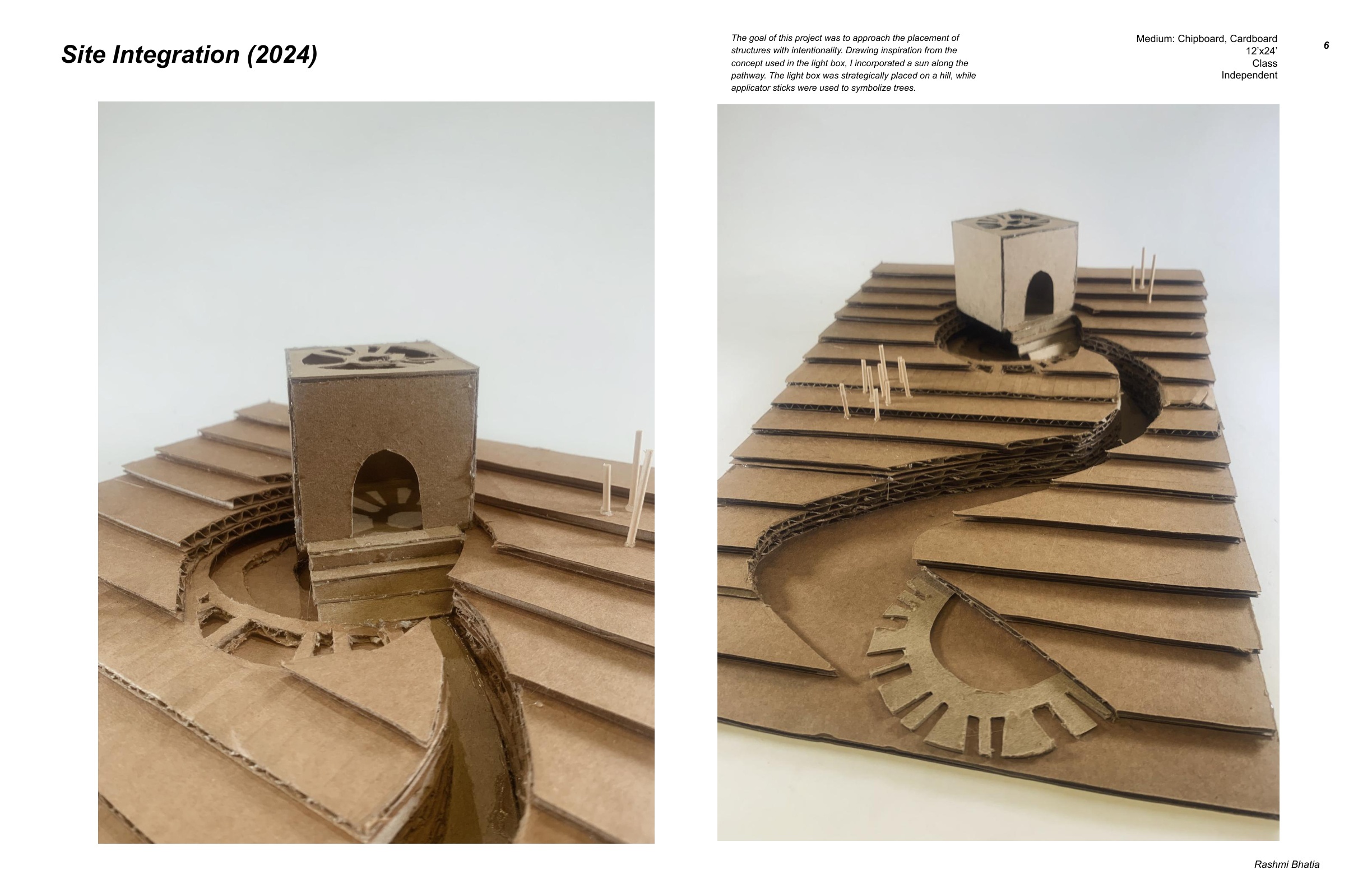
Intentional structure placement with a sun-lit pathway, light box on a hill, and applicator sticks symbolizing trees — integrating architecture with landscape.
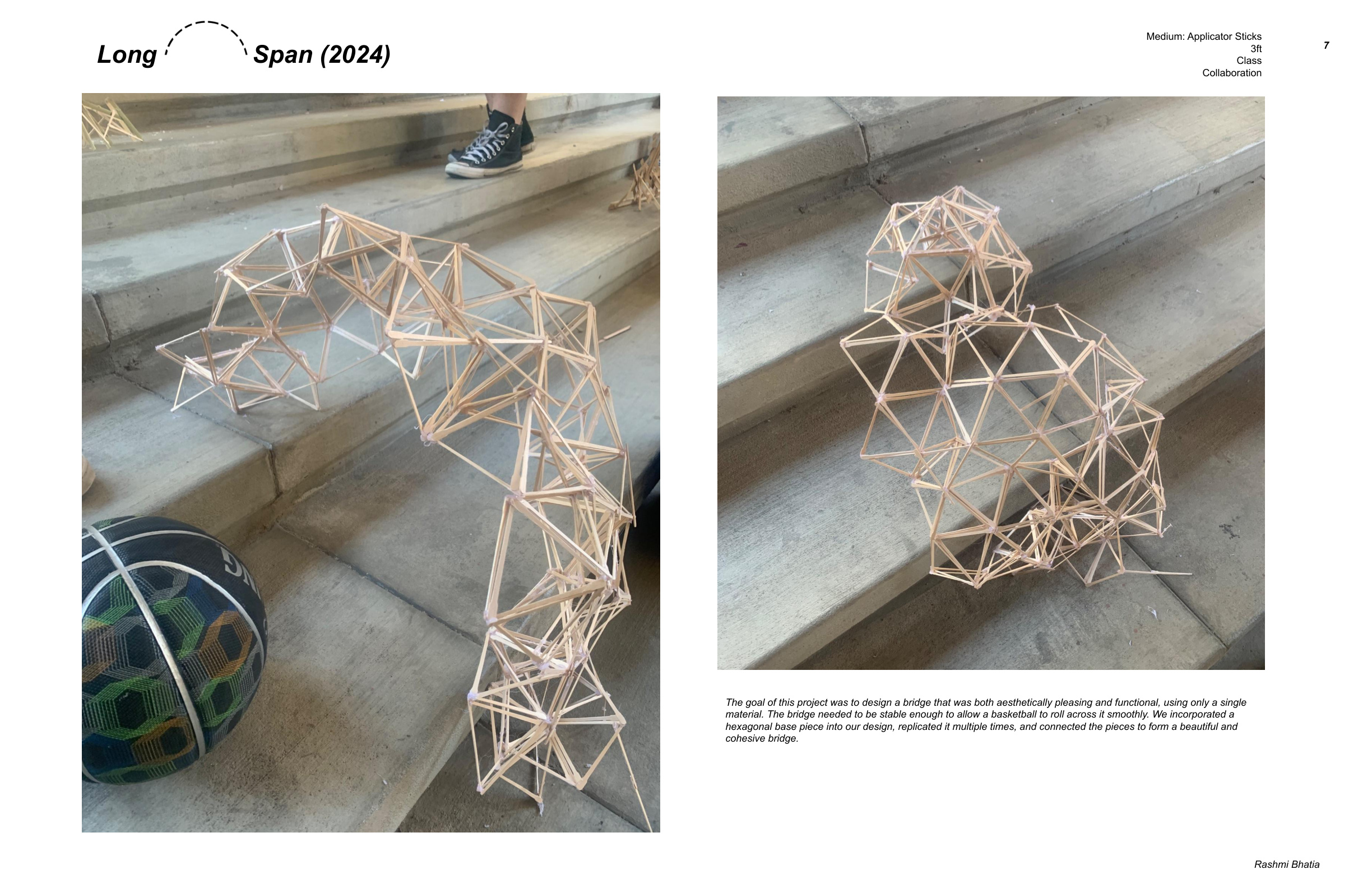
A functional 3-foot bridge built entirely from applicator sticks. The hexagonal base piece was replicated and connected to create a structurally sound, aesthetically cohesive span capable of rolling a basketball across.
A sustainable rainforest city where humans and animals coexist. Featuring eco-friendly homes, treehouses, gondola systems, hydroponic farming, and wind/hydro turbines. Complete with map, diorama, and physical model.
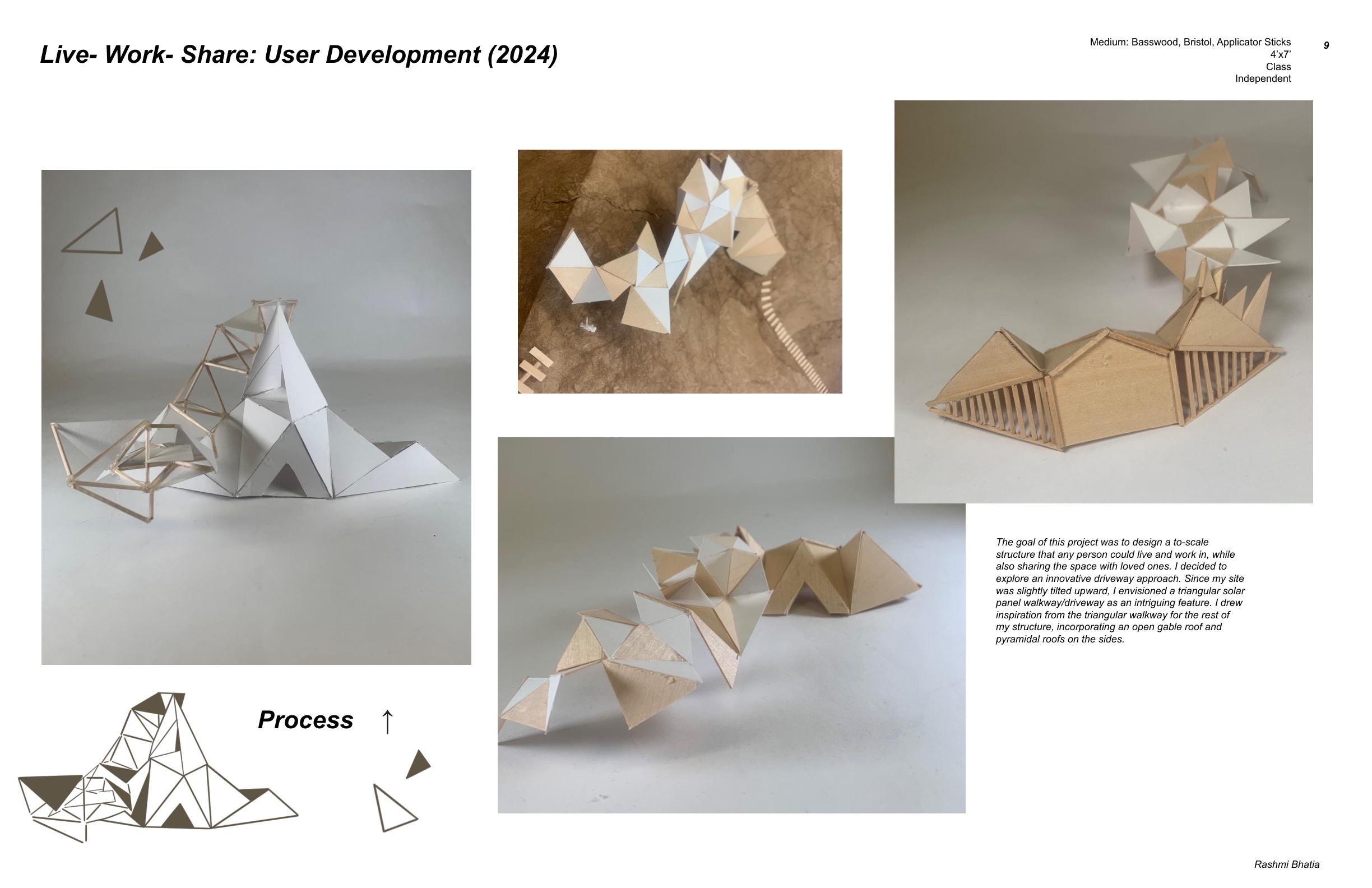
A to-scale live-work structure featuring an innovative triangular solar panel walkway, open gable roof, and pyramidal side roofs — designed for living, working, and sharing with loved ones.
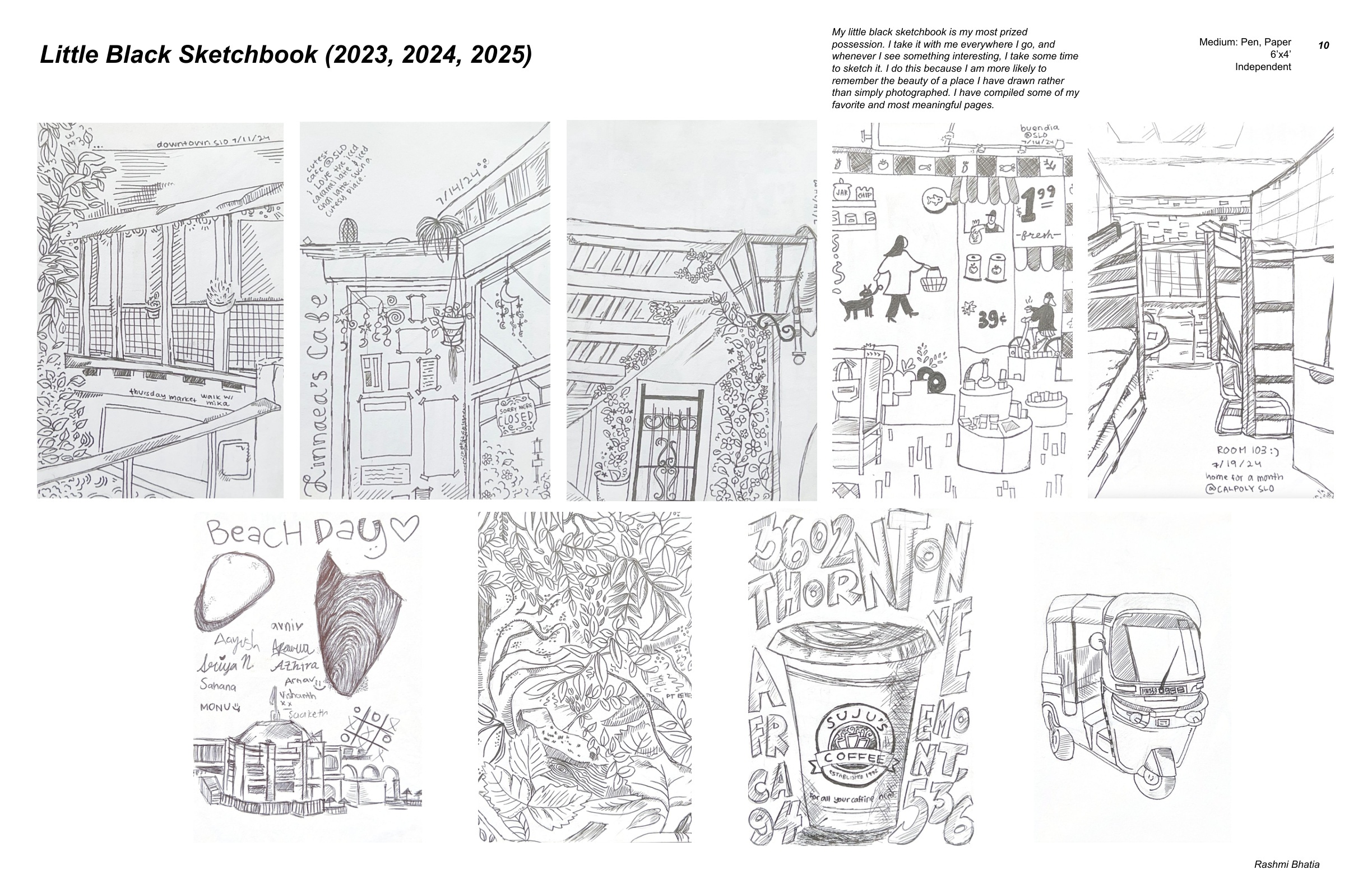
My most prized possession. I take it everywhere — whenever I see something interesting, I sketch it. I'm more likely to remember the beauty of a place I have drawn than simply photographed.
ARH 314 — Art History
A scholarly analysis of Rani Ki Vav, the 11th-century "Queen's Stepwell" in Gujarat, India. This research paper examines how the principal sculptural forms, religious context, and site converge to celebrate femininity, solidify beauty standards, and define the roles of women in Indian society — connecting art history to questions of power, identity, and architectural purpose.
Built in 1063 CE by Queen Udayamati as a memorial to King Bhimdev I, Rani Ki Vav is an "inverted temple" descending seven levels into the earth in the Māru-Gurjara architectural style. My paper argues that the stepwell's commissioning by a widowed queen, its imagery of apsarās and celestial women, and its location on the sacred Saraswati River together create a powerful statement about women's agency in medieval Indian architecture.
The comparative analysis places Rani Ki Vav alongside the Kailasa Temple (8th c.) and Jagannath Temple (12th c.) to demonstrate how architecture achieves unity through different means — from water access and pilgrimage to carved cliffside excavation — while sharing a common purpose of bringing communities together.
Publication Design — Cultural Storytelling
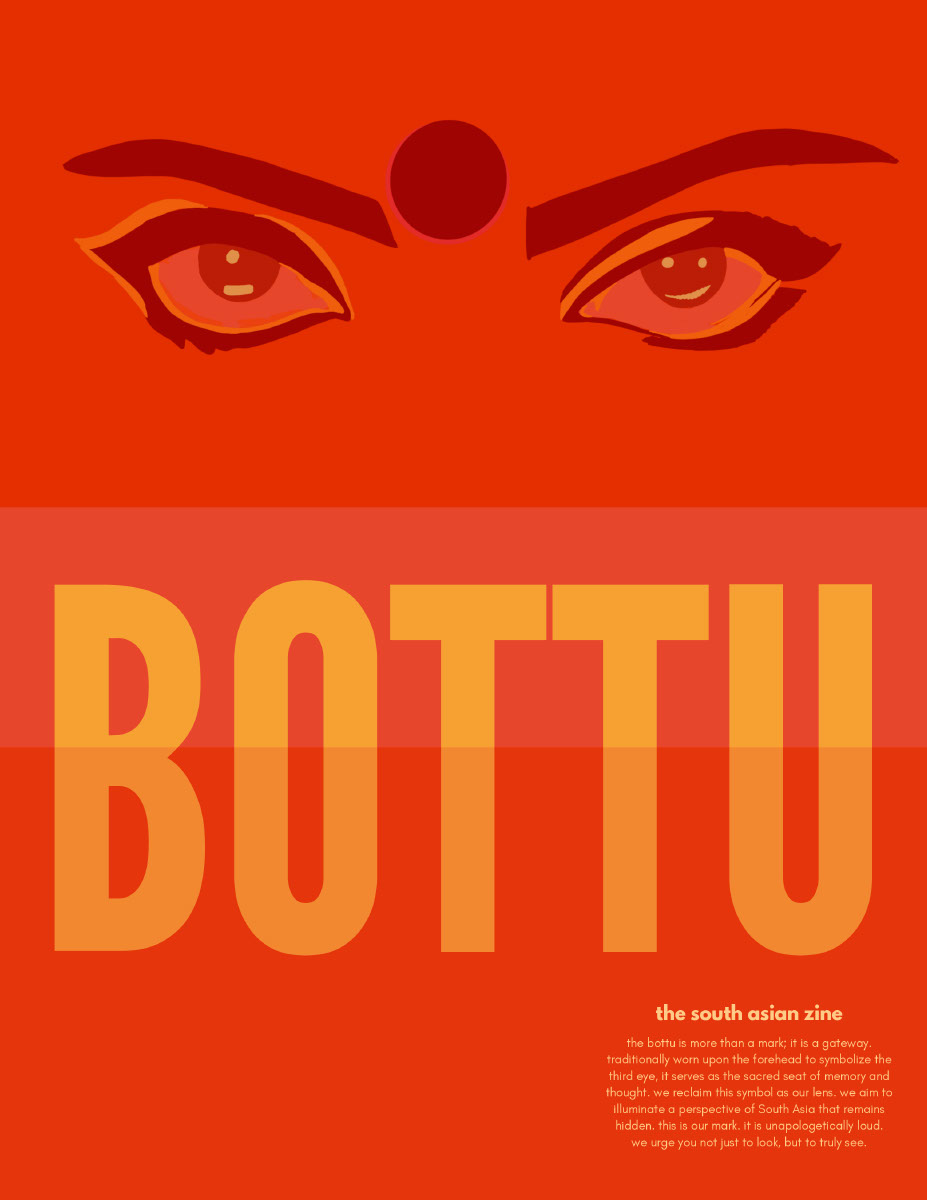
Created for SACA's Utsav programme, Bottu Mag is a creative exploration of cultural identity. It serves as both a personal artistic journey and an educational platform designed to connect students with the rich history, everyday rituals, and vibrant arts of South Asian heritage.
The South Asian Zine
The bottu is more than a mark; it is a gateway. This magazine reclaims a symbol of memory, identity, and cultural pride while inviting readers to truly see South Asian culture.
View MagazineThe magazine translates cultural memory into a student-facing resource: part art book, part guide, and part invitation. Across its pages, personal essays sit beside illustrated explainers, food spreads, architectural research, and social observations that make South Asian culture feel tactile and alive.
Fine Art
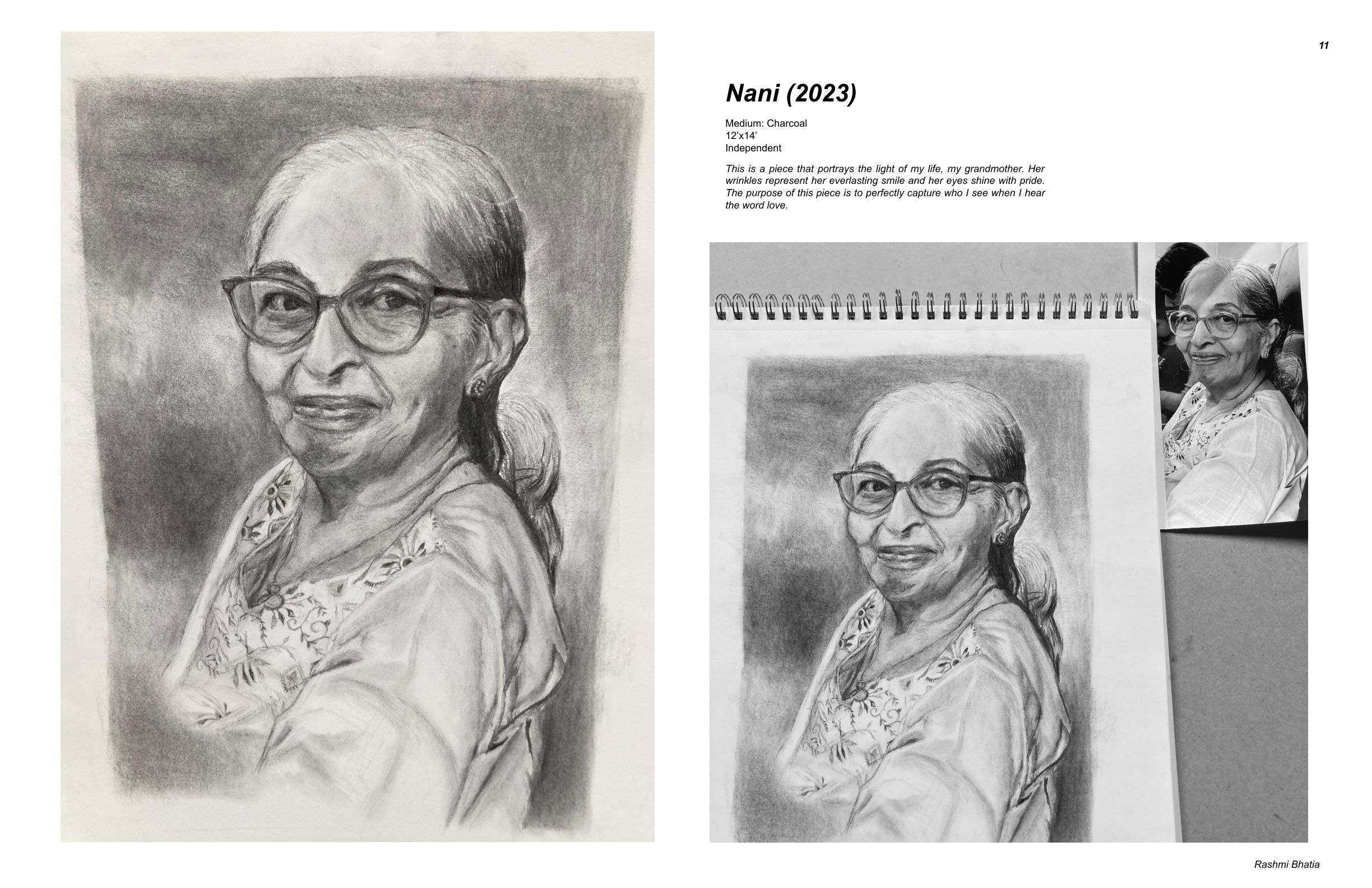
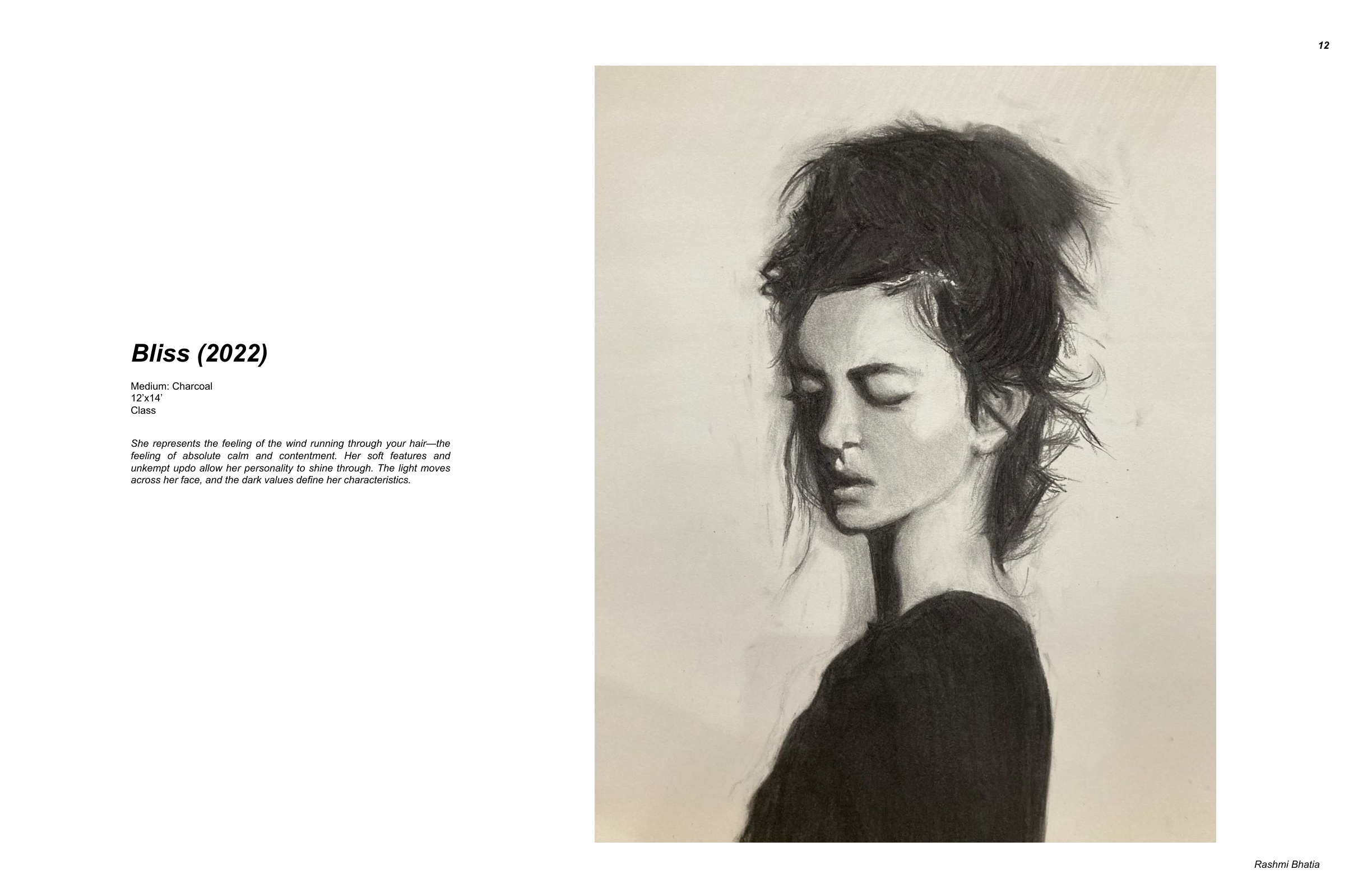
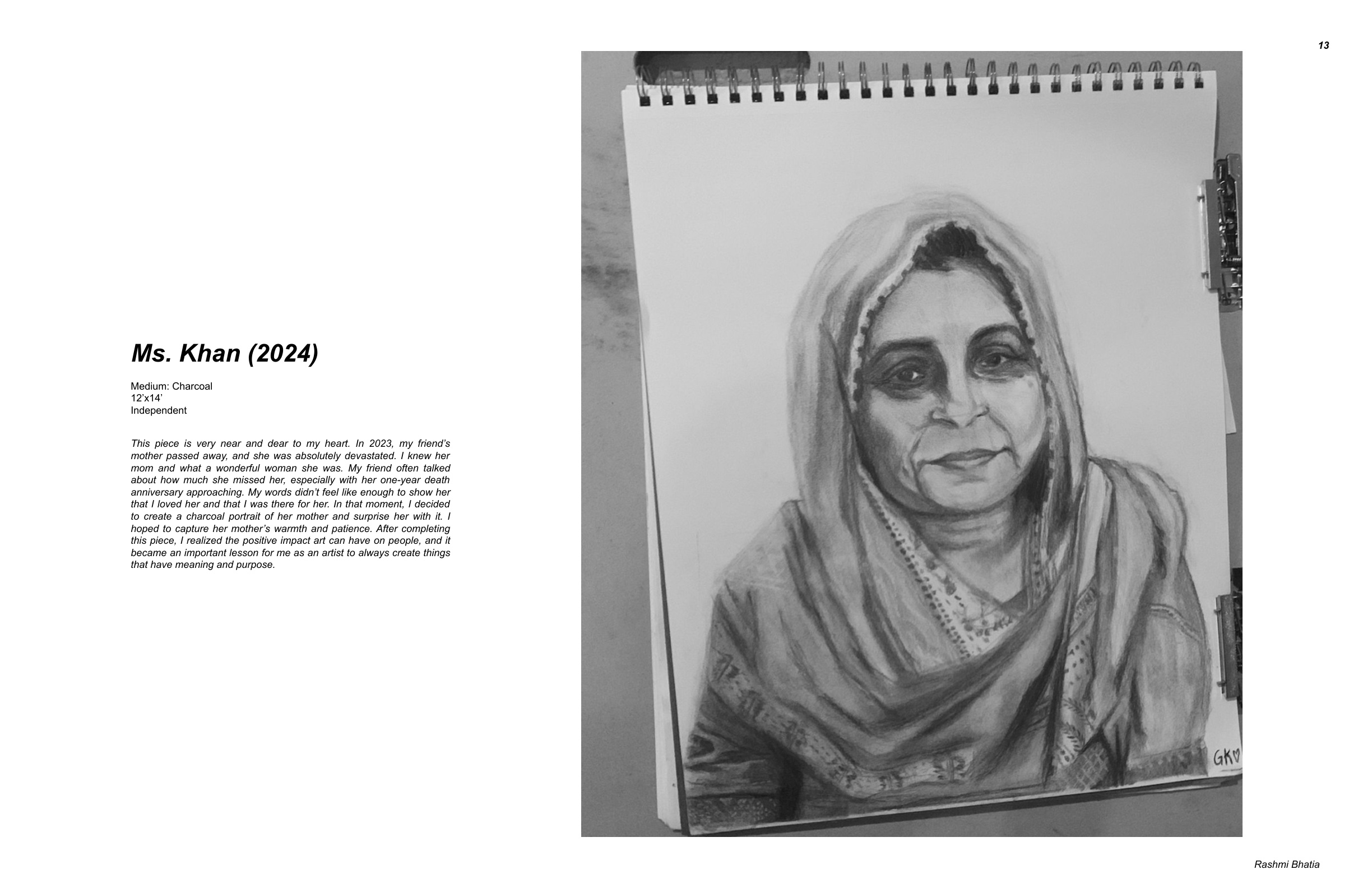
Trained at Ichen Art Academy, I've created over 35 oil paintings, charcoal drawings, and digital art pieces. These charcoal portraits hold deep personal meaning — each capturing not just a likeness, but the warmth and spirit of the people I love.
Skills & Experience
5-year professional architecture program. Dean's List, 4.1 GPA. Executive Chair, Public Relations — South Asian Cultural Alliance (SACA). Created Bottu Mag for SACA's Utsav programme. AIA Student Chapter.
4-week intensive in design fundamentals, structural engineering, site/community planning. Final gallery exhibition.
Graphic design business specializing in logos and merchandise. Clients include school teams, student coalitions, and a medical podcast.
Mastered charcoal portraiture, oil painting, and digital art. Created 35+ pieces across multiple media. AP Studio Art Bootcamp.
Co-founded an all-female troop (60+ members). Assistant Senior Patrol Leader. Eagle Project: community mural at Fremont Christian School.
Resume
One-page overview of my education, skills, design experience, and leadership.
Contact
Interested in collaboration, opportunities, or just want to chat about architecture and design?